Broken Key in Door Lock: What to Do Next
Locked out of your house? Here's exactly what to try before calling a locksmith, and when calling one is genuinely the right move.
In this guide
- A broken key in door lock is one of the more common emergency calls we get, and it's rarely as bad as it feels in the moment.
- What you do in the first few minutes affects how easily the broken piece comes out.
- Certain instinctive reactions genuinely make the problem worse.
- In most cases, the lock itself doesn't need replacing, just the stuck fragment removing.
That distinct snap of a key breaking off inside a lock is one of the more alarming sounds in daily life, but a broken key in door lock is a well-understood problem with a well-established solution, and panicking about it rarely helps.
What to do immediately
Stop turning anything. The single most important first step. Continuing to try to turn the broken fragment, or attempting to insert anything else into the lock, tends to push it further in or wedge it more tightly.
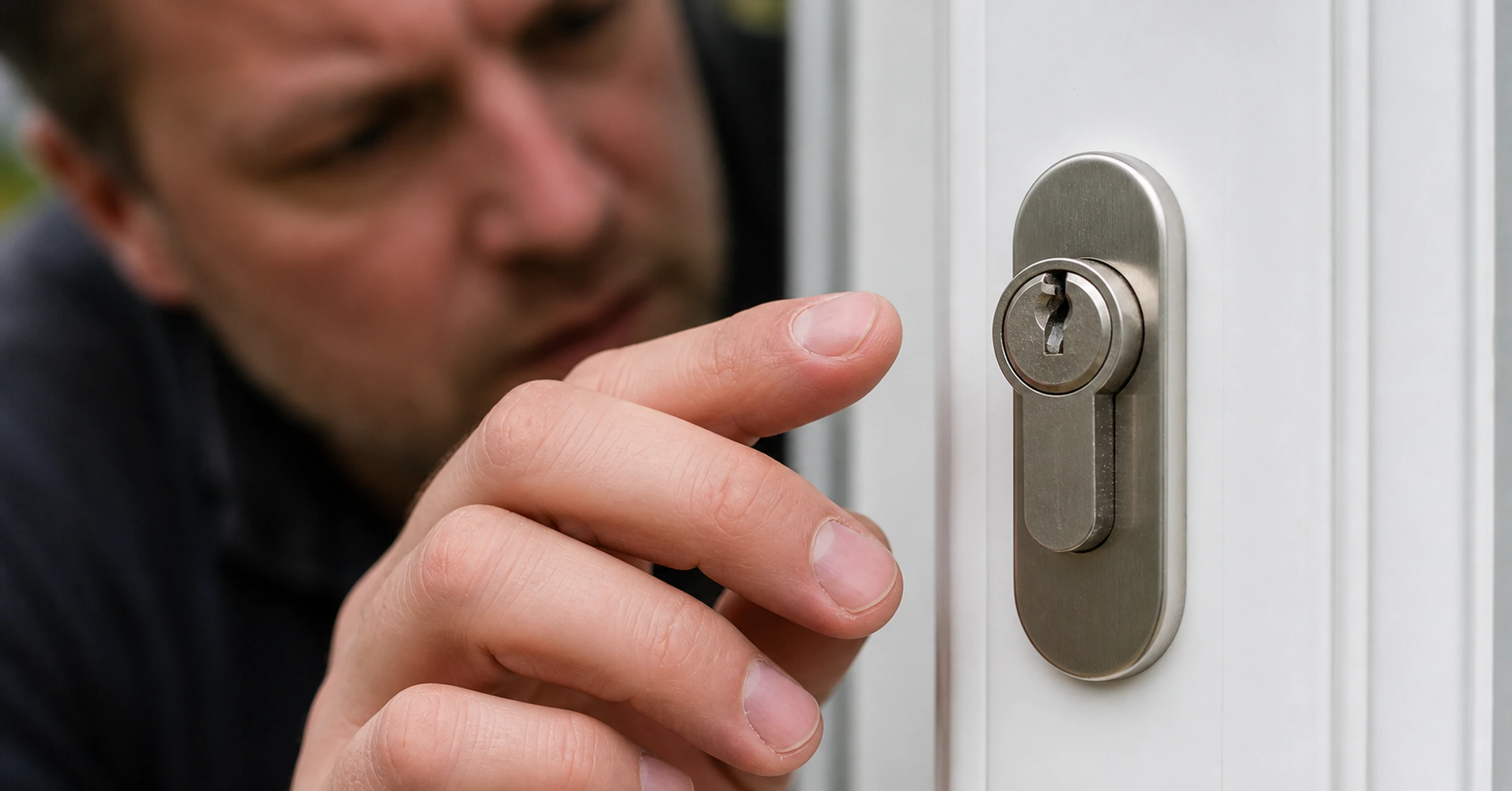
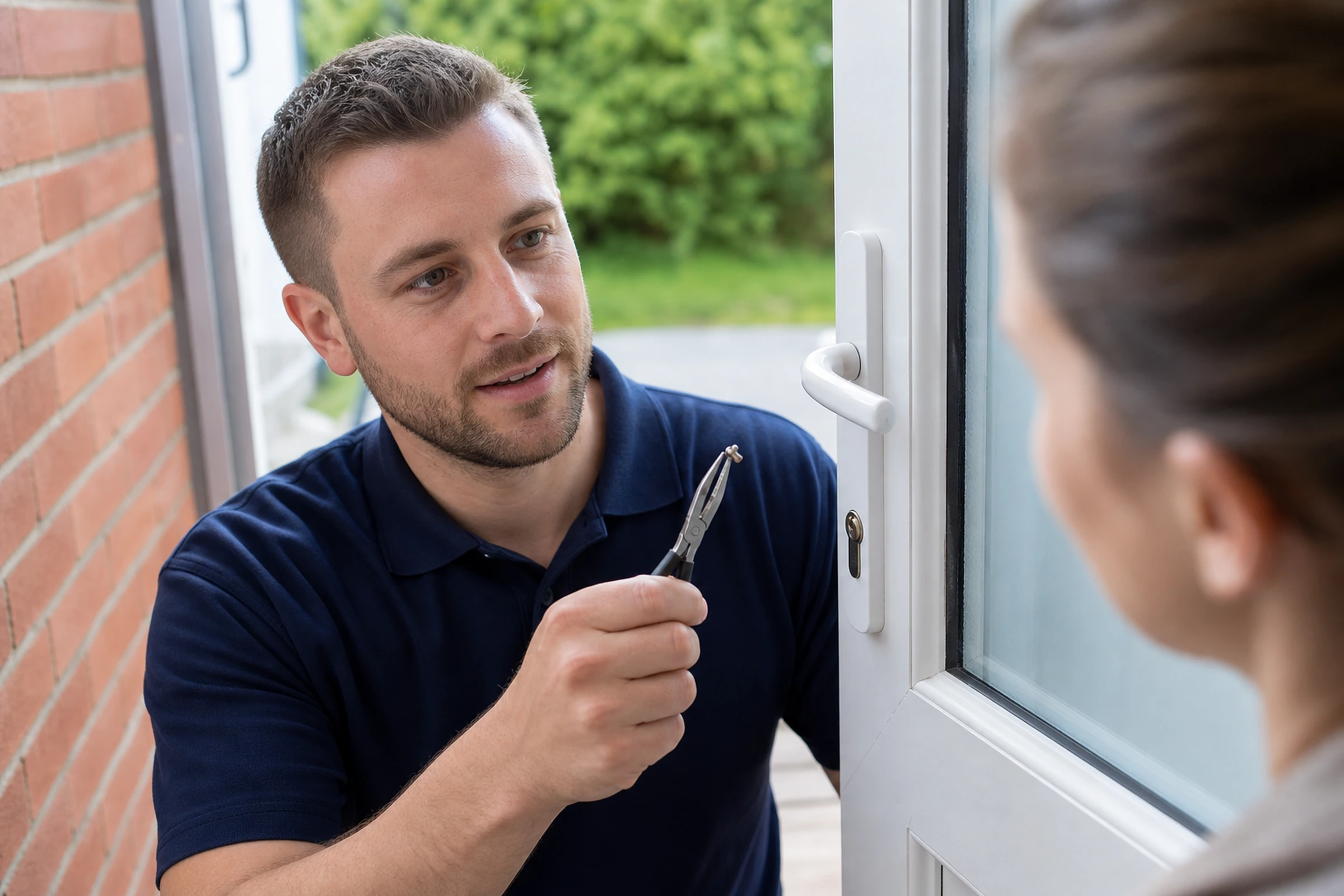
Check if any part of the key is still accessible. If a visible portion is protruding from the keyhole, it’s sometimes possible to grip it gently with fine-tipped pliers or tweezers and ease it out slowly and steadily, without twisting.
Don’t use superglue, tape, or any adhesive-based trick. These online suggestions circulate widely but frequently make the situation considerably worse, since adhesive that goes wrong inside a lock cylinder can mean the whole cylinder needs replacing rather than just extracting a broken key.
What not to try
Forcing the door open by other means while the key is stuck. This risks additional damage to the lock or the door itself, on top of the original problem.
Using a second key, or any other metal object, to try to push the fragment through. This commonly wedges the broken piece further into the mechanism, turning a straightforward extraction into a more involved repair.
Attempting to drill out the lock yourself. This is sometimes genuinely necessary as a last resort, but it should be done by a professional who understands the specific mechanism, since an amateur attempt can damage the surrounding door hardware unnecessarily.
Why keys actually snap
Why keys actually snap
Metal fatigue over time. Keys used frequently, particularly ones that have been copied several times from an original that’s already slightly worn, become more brittle and prone to snapping under normal use.
A worn or misaligned lock mechanism. If the lock itself requires extra force to turn, the key absorbs more stress with every use, which increases the chance of it eventually failing, often at the weakest point near the base.
Using the wrong key, or forcing a key that doesn’t quite fit properly. A key that requires wiggling or extra pressure to turn is under more mechanical stress than one that fits cleanly, and this repeated stress is a common precursor to a snap.
A key that’s recently started feeling stiffer or requiring more effort to turn is often signalling that it’s more likely to break soon, not simply being an inconvenience to put up with. Addressing that stiffness, whether through lubrication or a lock service, before it snaps is genuinely worth doing.
What happens once the key is extracted
In most cases, the lock itself is undamaged and simply needs a replacement key cut. A locksmith can typically extract the broken fragment and either use it as a template for a new key, or work from the lock itself if the fragment is too damaged to use as a guide.
Occasionally, the lock mechanism has been damaged in the process, particularly if force was applied before a professional was called, in which case the mechanism itself may need replacing rather than just the key.

If a key has broken off in your lock, call us and avoid making it worse before a professional has a chance to extract it properly.
Frequently asked questions
Usually metal fatigue from repeated use, a lock that requires extra force to turn, or a key that's been copied multiple times from an already-worn original, all of which increase stress on the key over time.
Stop turning anything immediately, avoid inserting other objects to try to push it through, and if a portion is visibly accessible, gently ease it out with fine-tipped pliers without twisting.
No. This commonly circulated trick often makes the situation considerably worse, since adhesive gone wrong inside a lock cylinder can mean the entire cylinder needs replacing.
Not usually. In most cases the lock itself is fine and only needs the broken fragment extracted and a replacement key cut. A new lock is only needed if the mechanism itself has been damaged.
To some extent. A key or lock that's started feeling stiffer than usual is often an early warning sign, and addressing that through lubrication or a lock check before it fails can prevent a snap.
Keep reading

Copyright © 2026 123Unlock, Design & Develop by Brand Builders.