Patio Door Lock Repair: Common Problems and Costs
Locked out of your house? Here's exactly what to try before calling a locksmith, and when calling one is genuinely the right move.
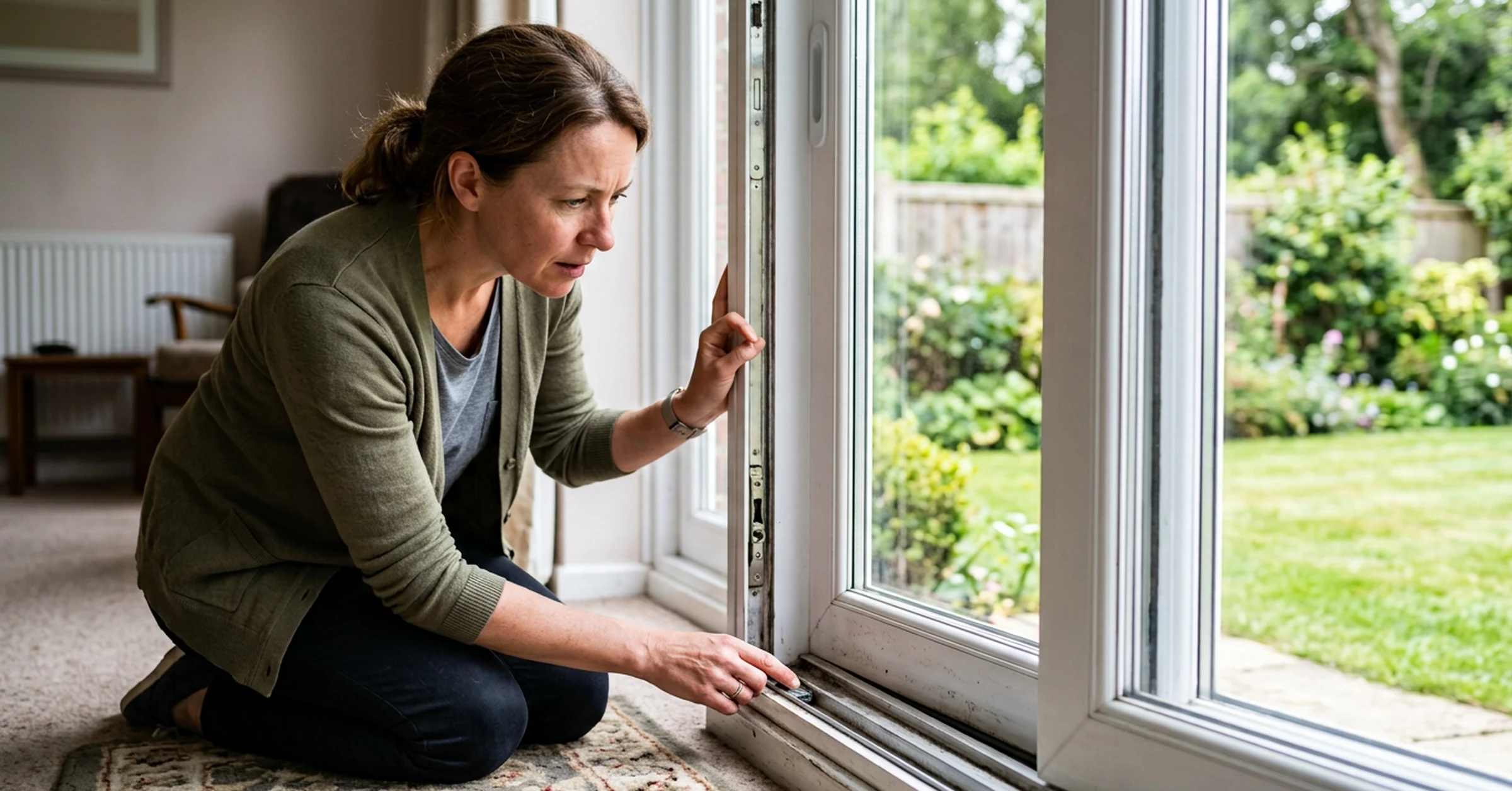
In this guide
- Patio door lock repair almost always traces back to one of a handful of well-understood mechanical faults.
- Sliding patio doors and French patio doors fail in slightly different ways, and knowing which applies helps set expectations.
- A door that's dropped or misaligned in its track is often mistaken for a lock problem entirely.
- Most patio door lock issues are repairable without replacing the whole door.
Patio doors take a particular kind of wear that front and back doors don’t experience in the same way, largely because of the track and rolling mechanism sliding designs depend on. Patio door lock repair covers a fairly specific, recurring set of faults, and knowing what’s actually causing yours before calling anyone helps set realistic expectations.
Sliding Patio Doors: The Most Common Faults
The lock engages but the door still feels loose or rattles. This usually points to wear in the rollers or track rather than the lock itself, since a sliding door depends on smooth, snug movement along its track to lock securely, and worn rollers let the door sit slightly off, undermining the lock’s effectiveness even when it appears to engage.
The door has become difficult to slide, which often gets misdiagnosed as a lock fault. A door that’s dropped slightly in its track, or accumulated debris along the running surface, can make locking feel stiff or inconsistent, when the actual issue is mechanical rather than the lock mechanism itself.
The multipoint lock, where fitted, fails to engage at all points along the door. Similar to a hinged door’s multipoint system, sliding patio doors with this style of lock can develop the same kind of internal mechanism wear, needing the same category of repair.
French Patio Doors: Different Failure Patterns
One leaf locks properly while the other doesn’t, common with French-style double doors where one leaf is the primary, locking leaf and the other relies on bolts at the top and bottom. Wear or misalignment in these bolts is a frequent, specific fault.
The doors don’t meet flush in the middle, causing the central locking point to fail to engage properly. This often traces back to hinge wear or a door that’s dropped slightly, similar to the alignment issues seen in sliding doors, but affecting a different part of the mechanism.
What Repair Actually Involves
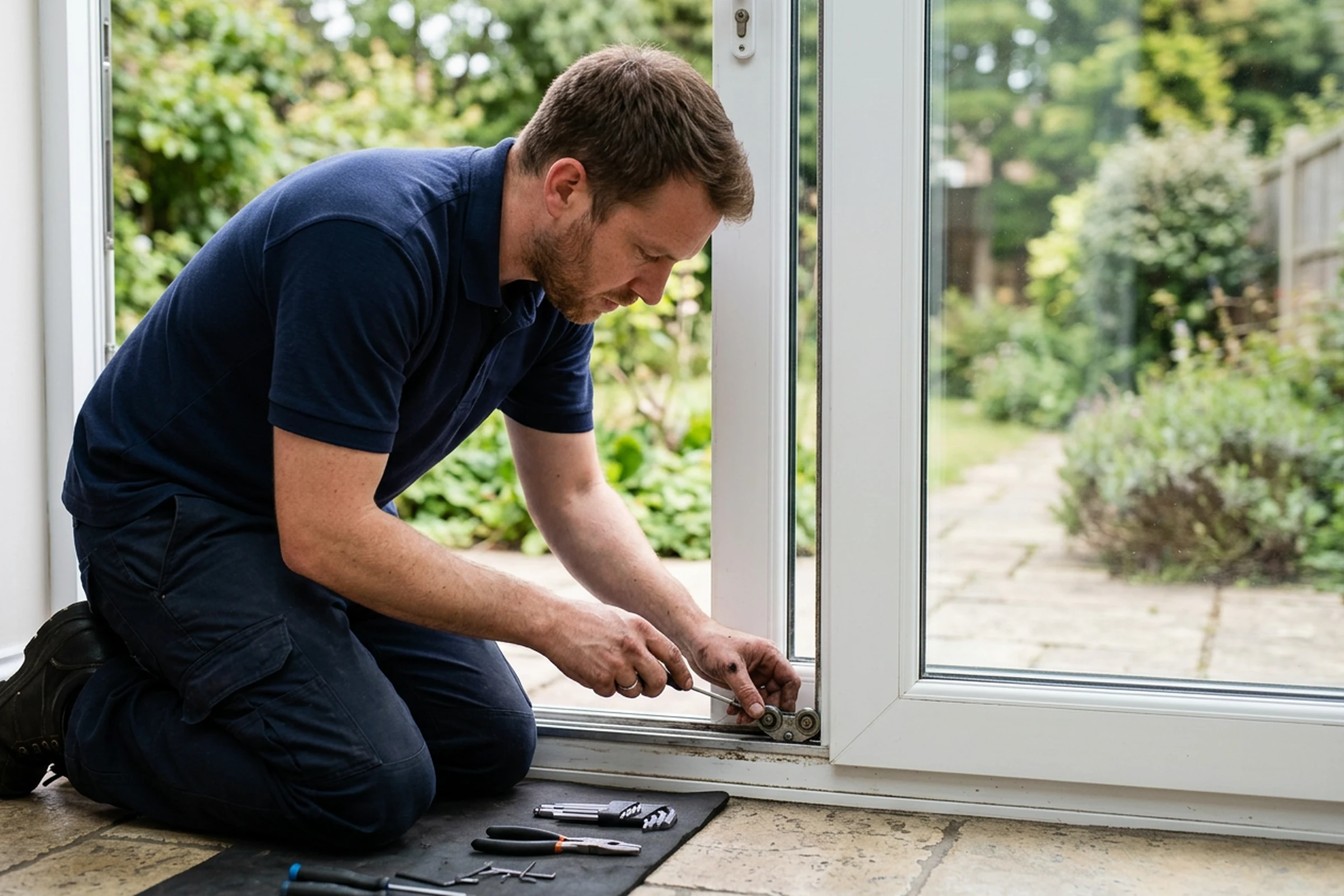
Roller replacement or adjustment for sliding doors. Worn rollers are one of the most common underlying causes of patio door problems that present as locking issues, and replacing or adjusting them often resolves the fault without touching the lock hardware at all.
Track cleaning and realignment. A build-up of debris or a slightly warped track can be addressed directly, restoring smooth movement that allows the lock to engage properly again.
Multipoint mechanism replacement, when the lock itself has genuinely failed. As with hinged doors, the internal mechanism can wear out independently of the track and rollers, and this is a contained, well-understood repair rather than requiring a full door replacement.
Hinge adjustment for French doors that no longer meet flush. Correcting the alignment often resolves what initially looks like a locking fault, since the lock simply cannot engage properly when the doors themselves aren’t meeting correctly.
Security Considerations Specific to Patio Doors
Patio doors are a commonly targeted entry point, given their size and the glass involved. This makes ensuring the lock genuinely engages properly, rather than just appearing to close, particularly important for this specific door type.
Additional security options exist beyond the standard lock. Secondary locks, anti-lift devices for sliding doors, and laminated or toughened glass are all worth considering, particularly for patio doors that back onto less visible parts of a property.
A useful way to think about the distinction is that rekeying addresses who has access, while replacement addresses both access and the underlying quality of the security itself. If your only concern is who might hold a key, rekeying is usually sufficient. If the lock’s condition or standard is also in question, replacement is the more complete answer.

If your patio door isn’t locking properly, get in touch for an accurate diagnosis rather than guessing whether it’s the lock, the track, or the rollers.
Frequently asked questions
Most commonly worn rollers or a misaligned track rather than the lock itself, since a sliding door needs smooth, snug movement along its track for the lock to engage securely.
Rarely. Most patio door lock faults are repairable, whether that's roller replacement, track adjustment, or a contained multipoint mechanism repair, without needing to replace the door itself.
This is a common fault, often caused by wear in the top and bottom bolts on the secondary leaf, or the doors not meeting flush in the middle due to hinge wear or a dropped frame.
Yes, given their size and the glass involved, which makes ensuring the lock genuinely engages, alongside considering additional security measures, particularly important for this door type.
It depends on the specific fault, ranging from a straightforward roller adjustment to a full multipoint mechanism replacement, so an accurate diagnosis first avoids paying for unnecessary work.
Keep reading

Copyright © 2026 123Unlock, Design & Develop by Brand Builders.