Window Lock Repair: DIY or Call a Locksmith?
Locked out of your house? Here's exactly what to try before calling a locksmith, and when calling one is genuinely the right move.

In this guide
- Window lock repair ranges from a five-minute fix anyone can do to a job that genuinely needs a professional.
- A stiff handle is often solvable at home. A broken locking point usually isn't.
- Getting this wrong in either direction either wastes money on a call-out you didn't need, or damages a window trying to fix something beyond a simple tweak.
- Security matters here specifically, since a poorly repaired window lock is a genuine vulnerability.
Not every window lock problem needs a professional, and not every one is safe to attempt yourself. Window lock repair genuinely splits into two categories, and being honest about which one you’re dealing with saves both money and frustration.
What's usually safe to try yourself
A stiff or difficult handle. Often simply needs lubrication rather than replacement. A small amount of silicone-based lubricant, not general household oil which can attract dirt and make things worse over time, applied to the moving parts frequently resolves this within minutes.
A handle that’s slightly loose. Checking and tightening the visible screws holding the handle to the window is a straightforward, low-risk task most people can manage safely.
Debris or dirt preventing smooth operation. Cleaning the track and locking points of a uPVC window, particularly after a long period without maintenance, sometimes resolves what feels like a mechanical fault but is really just accumulated grime.
What genuinely needs a professional
A broken or snapped locking point. The metal components that actually engage to secure the window, if physically broken or bent, need replacement parts and proper fitting, not a workaround.
A handle that turns but doesn’t engage the lock at all. This usually indicates an internal mechanism failure rather than a surface-level issue, and attempting to force it risks breaking components further.
Misalignment where the window doesn’t sit correctly in the frame. This can be a sash or hinge issue rather than purely a lock problem, and correcting it often requires adjusting the window itself, not just the lock hardware.
Any damage from a forced entry attempt. Beyond the security concern of leaving it unrepaired, forced entry damage often affects the frame integrity, not just the lock, and needs proper assessment.
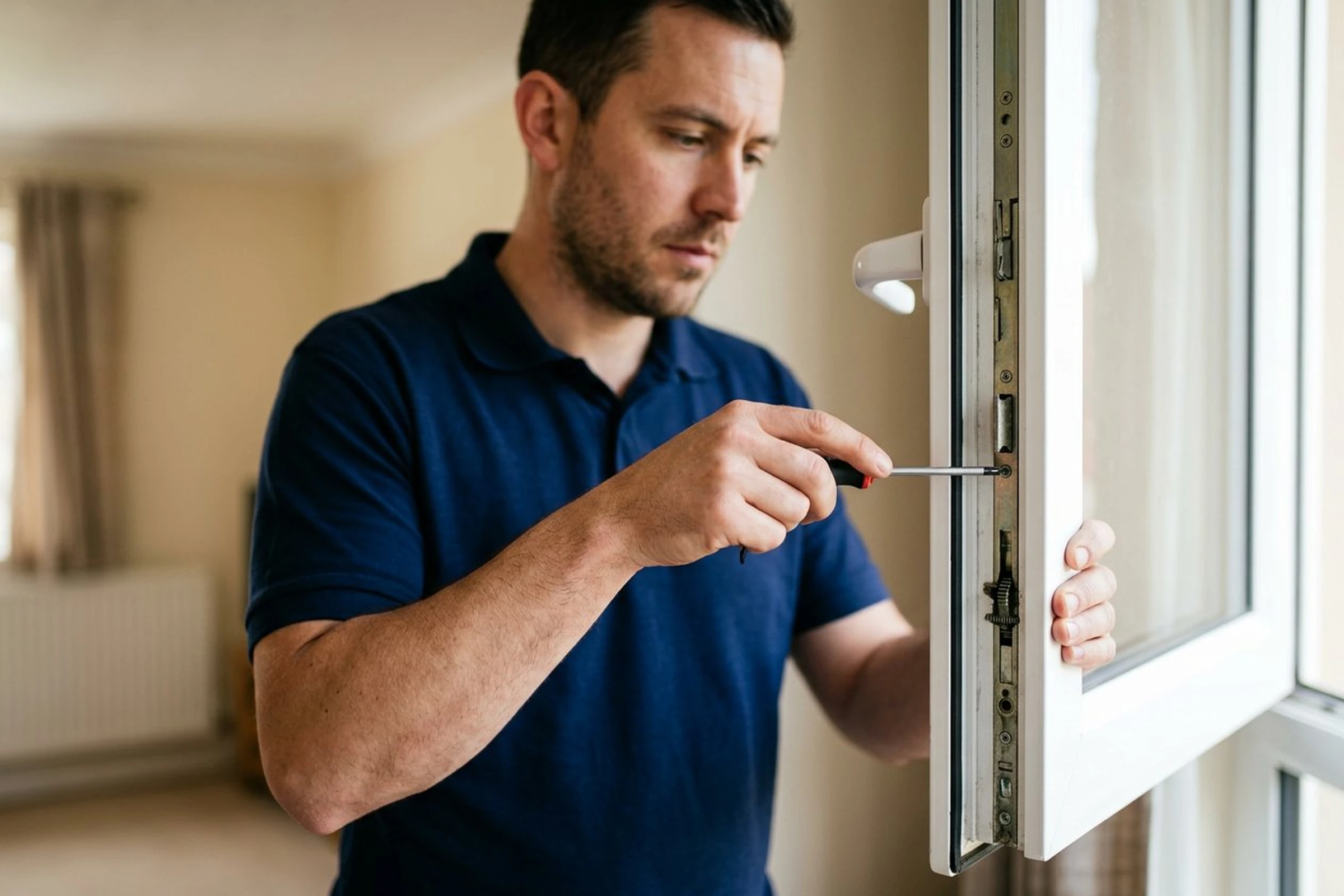
Why security matters more here than it might seem
A window is one of the most common points of entry in a break-in, alongside doors. A lock that appears to work but doesn’t fully engage provides a false sense of security that’s arguably worse than a lock you know is broken.
A poorly executed DIY repair can leave a window looking secure while actually being compromised. This is the specific risk of attempting a repair beyond a simple fix, since the window may close and appear locked without the mechanism actually engaging properly.
Ground-floor and easily accessible upper-floor windows deserve particular attention, since they represent the most practically vulnerable points around most UK homes. A repair that’s “good enough” on a window like this isn’t actually good enough.
A simple way to decide
If you can identify a specific, visible, minor issue like stiffness or a loose screw, trying a straightforward fix yourself is reasonable.
If the problem involves anything internal to the mechanism, anything broken, or anything you can’t clearly diagnose, it’s worth getting a professional opinion before attempting a repair that could make things worse or leave a security gap you’re not aware of.
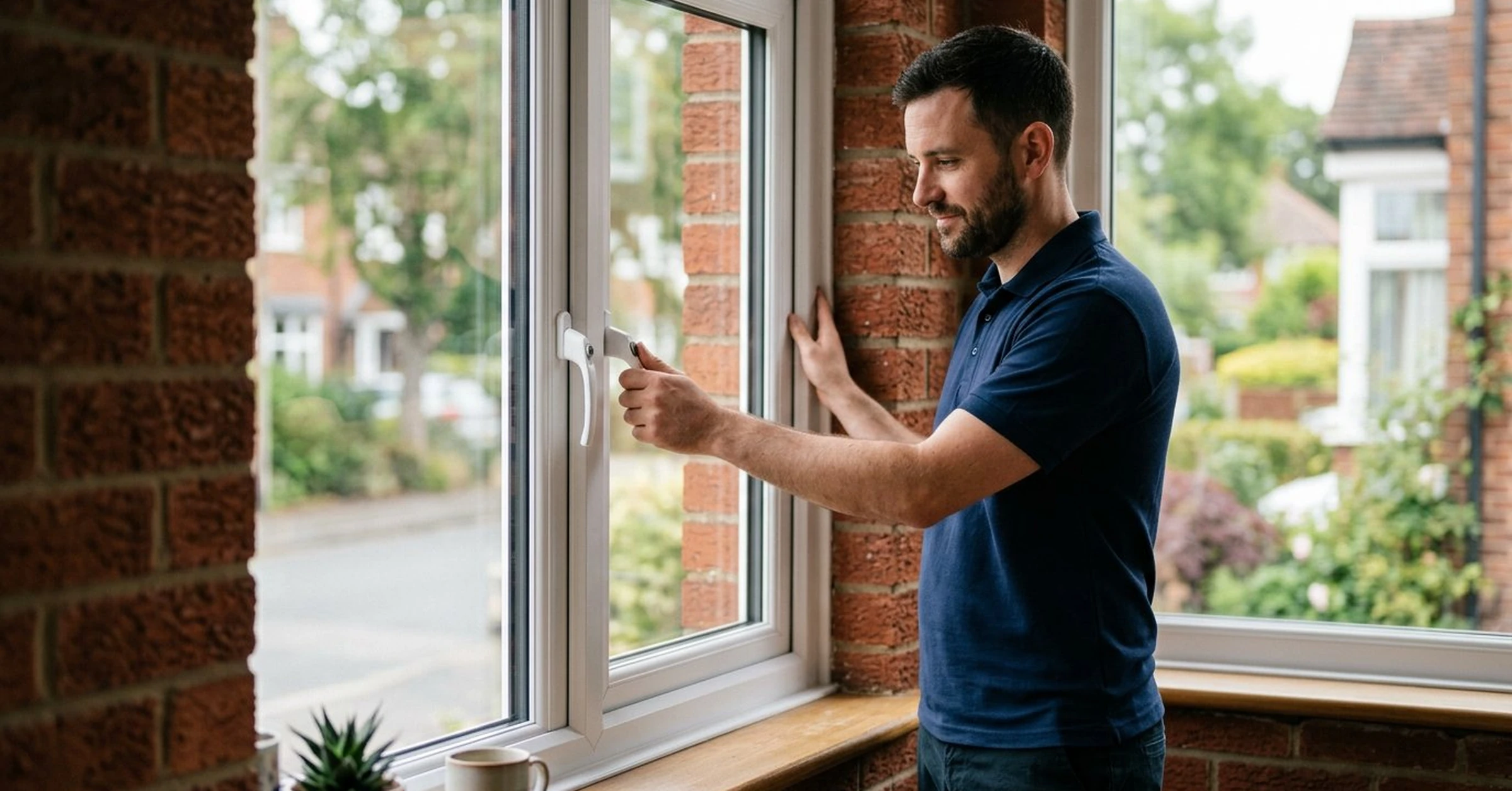
If you’re unsure whether your window lock issue is a simple fix or needs a professional, get in touch and we’ll talk you through it before you spend money on anything.
Frequently asked questions
Often yes. A stiff handle frequently just needs a small amount of silicone-based lubricant on the moving parts, which is a safe and simple fix most people can do themselves.
When the fault involves a broken or bent locking point, a handle that turns without engaging the lock, or any damage from a forced entry attempt, since these need proper parts and fitting rather than a workaround.
Most repairs are completed within an hour or two, depending on the specific fault, since it typically involves swapping a well-understood component rather than extensive work.
It depends on the specific fault, ranging from a straightforward mechanism replacement to a more involved repair if the frame or sash is also affected. Getting an accurate diagnosis first avoids paying for unnecessary work.
General household oils like WD-40 aren't ideal for window mechanisms, since they can attract dirt over time and make the problem worse. A silicone-based lubricant designed for locks and window mechanisms is a better choice.
Keep reading

Copyright © 2026 123Unlock, Design & Develop by Brand Builders.