Garage Door Lock Replacement
Upgrade or replace your garage door lock with a DBS-checked locksmith. Same-day quotes, upfront pricing, no hidden fees.
In this guide
- Signs Your Garage Lock Needs Replacing
- Types of Garage Door Locks
- What the Job Involves
- Garage Security Beyond the Lock
- Who This Matters Most For
- Understanding Garage Door Types and Lock Compatibility
- What to Expect From a Quote
- Garage Security and Home Insurance
- Cost Factors
- Assessing What You Actually Need to Protect
- How Garage Break-Ins Typically Happen
- Combining a Garage Upgrade With Wider Home Security
- A Closer Look at How We Approach a Garage Security Upgrade
- Examples of Garage Security Situations We See Regularly
- Garage Doors as Part of a Wider Home Security Review
- Weighing Up Cost Against Risk for a Garage Upgrade
A weak or outdated garage door lock is one of the most common entry points for break-ins, partly because many homeowners focus their security attention on the front and back doors and overlook the garage entirely. This guide explains how to know when it is time to upgrade, what your options are, what the job actually involves, and how to think about garage security as part of your home’s overall protection.
Signs Your Garage Lock Needs Replacing
Visible rust, a lock that sticks or requires extra force to turn, or a door that does not sit flush when locked are all signs the mechanism is failing or was never particularly secure to begin with. Many UK garages still have the original lock fitted when the property was built, which in older housing stock can be several decades old and well below current security standards.
A less obvious sign worth checking for is a lock that appears intact but can be defeated with minimal force, which is a known weakness of some older T-handle designs. If you are not sure how resistant your current lock actually is, a quick assessment from a locksmith can tell you far more than a visual check alone.
Types of Garage Door Locks
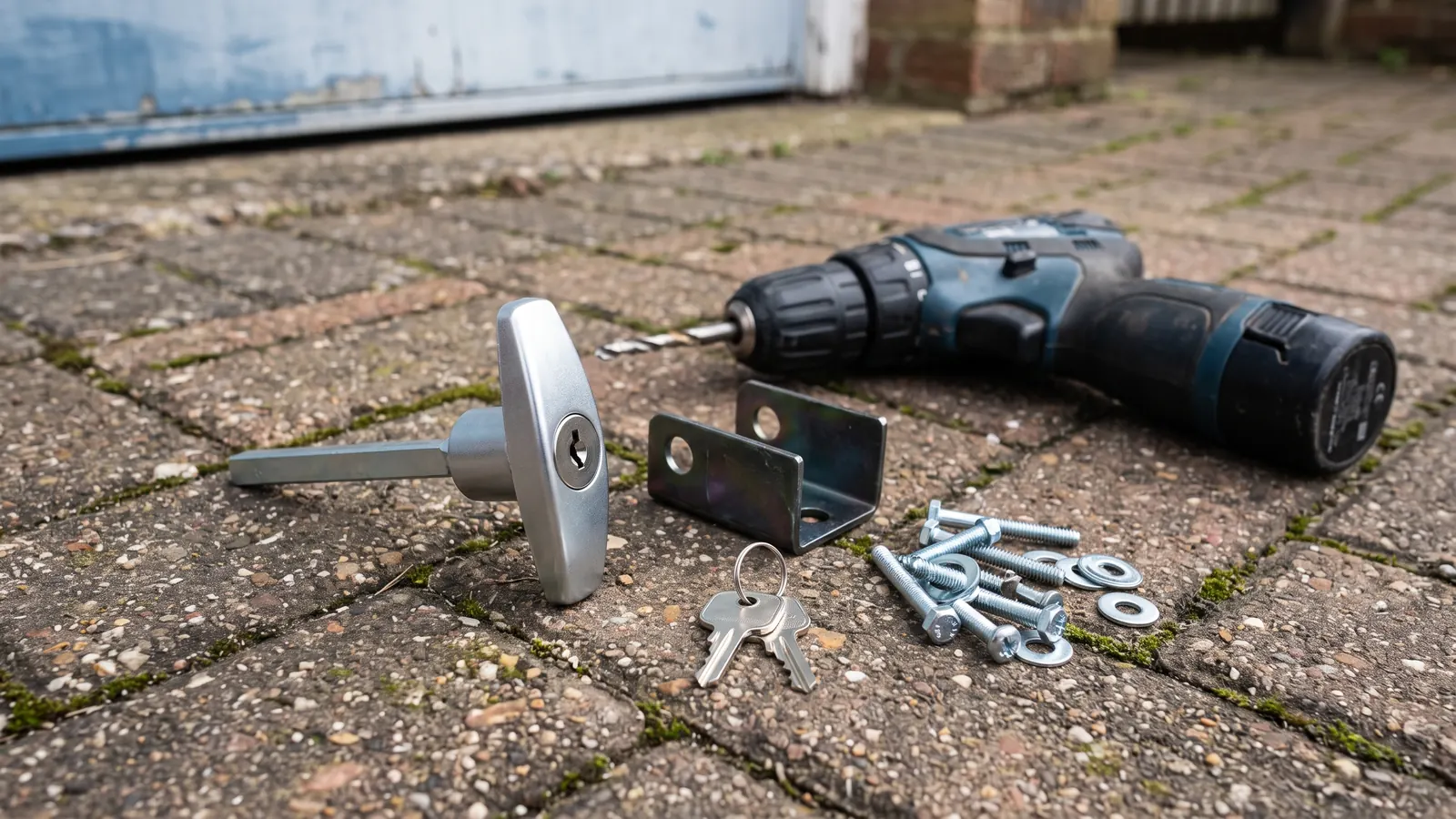
T-handle locks, defender-style locks, and electronic options each suit different garage door types and different household needs. T-handle locks are common on up-and-over doors but are relatively easy to force compared to modern alternatives. Defender locks add a substantial metal bar across the locking point and are significantly harder to break through, making them a popular upgrade for anyone storing tools, bikes, or other valuables in the garage. Electronic options suit households who want keyless access, though they come with their own maintenance considerations around batteries and weatherproofing.
There are also hybrid approaches worth considering, such as fitting a defender lock alongside the existing mechanism rather than replacing it entirely, which can be a cost-effective way to add a meaningful security layer without a full lock swap.
What the Job Involves
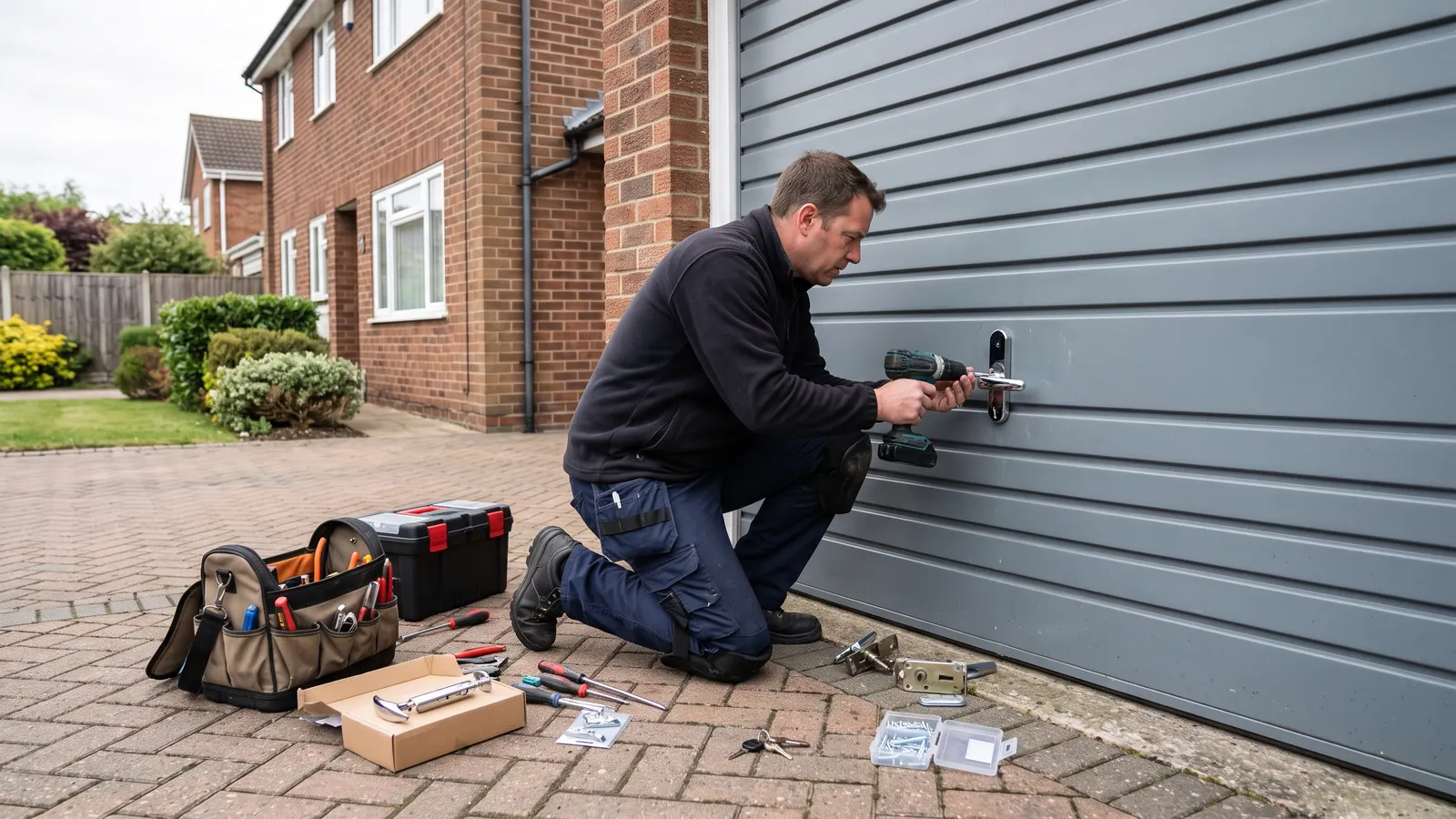
We assess the existing mechanism, remove the old lock carefully to avoid damaging the door panel, and fit the replacement, usually within an hour from start to finish. For most up-and-over and sectional doors this is a straightforward swap, though roller doors sometimes need a slightly different approach depending on the track and motor setup, which we will talk you through before quoting.
Where the garage also has a motorised opener, we will check that the new lock does not interfere with the motor’s operation, since some retrofit security locks need to be disengaged before the automatic opener is used, and we will explain this clearly if it applies to your setup.
Garage Security Beyond the Lock
A new lock is the most effective single upgrade, but a few other details are worth considering at the same time. Check that the garage door frame itself is solid, since even a strong lock cannot compensate for a frame that can be levered apart. If your garage connects directly to the house, treat the internal door with the same seriousness as an external door, including a proper lock rather than a simple latch.
It is also worth considering visibility and lighting around the garage, since well-lit entry points are consistently shown to deter opportunistic attempts more than almost any single piece of hardware. A motion-activated light near the garage door is a relatively low-cost addition that complements a new lock well.
Who This Matters Most For
Garage security tends to matter most for households storing power tools, bikes, or a second vehicle, as these are common targets for opportunistic theft. Tradespeople who keep stock or equipment in a domestic garage overnight are particularly worth upgrading early, since the value stored often far exceeds the cost of a proper lock.
Understanding Garage Door Types and Lock Compatibility
Up-and-over doors, sectional doors, and roller doors each have slightly different locking points and mechanisms available to them. Up-and-over doors typically use a T-handle or similar centrally mounted lock, sectional doors often have locking points integrated into the track system, and roller doors frequently rely on a combination of the motor unit and a manual override lock. Knowing your door type in advance helps us bring the right options when we visit, though we are always happy to assess on site if you are unsure.
What to Expect From a Quote
When we quote for a garage lock upgrade, we will explain the specific lock options suited to your door type, the relative security benefit of each, and the approximate cost difference between them. We never assume you want the most expensive option, and we are equally happy to fit a straightforward, budget-conscious upgrade as a premium defender lock, depending on what genuinely suits your situation.
Garage Security and Home Insurance
Some home insurance policies specify minimum security standards for outbuildings and garages, particularly where high-value items are declared as stored there. It is worth checking your policy wording, since a documented security upgrade can sometimes support a claim or even reduce premiums, though this varies by insurer and we would always recommend confirming directly with them.
Cost Factors
Price depends mainly on lock type and door material, with defender locks typically costing more than a basic T-handle replacement but offering a meaningful security improvement in return. We confirm the exact cost before any work starts, and will always explain the trade-offs between options rather than simply upselling the most expensive choice.
Assessing What You Actually Need to Protect
Before recommending a specific lock upgrade, we think it is worth having an honest conversation about what is actually stored in the garage, since the right level of security genuinely depends on this. A garage used mainly for bins and garden furniture has different risk factors to one storing power tools, a second vehicle, or stock for a trade business. We would rather ask a few questions and recommend something proportionate than default to the most expensive option regardless of what is being protected. This also affects how urgently an upgrade is worth prioritising if you are weighing it against other home improvements.
How Garage Break-Ins Typically Happen
Understanding the common methods used against garage doors helps explain why certain upgrades matter more than others. T-handle locks, common on older up-and-over doors, can often be defeated by force applied directly to the handle mechanism itself, snapping the internal linkage rather than picking the lock in the traditional sense. This is different from how a typical front door lock is attacked, which is part of why a garage specifically benefits from defender-style hardware designed to resist this particular kind of force rather than just a stronger version of a standard cylinder lock. Opportunistic attempts are also far more common than planned, targeted ones for domestic garages, which is why visible deterrents, a solid-looking lock, good lighting, and a tidy, closed-off appearance, genuinely reduce risk even before accounting for the lock’s actual strength.
Combining a Garage Upgrade With Wider Home Security
If a garage connects internally to the house, which is common in a lot of UK housing stock, it is worth treating the internal connecting door with the same seriousness as an external door, since a garage breach can otherwise provide a quiet, hidden route into the home itself. We often find this internal door has only a basic latch rather than a proper lock, on the assumption that the garage door itself is the main barrier. Fitting a proper lock to this internal door as part of a garage security upgrade closes a gap that is easy to overlook, and it is a relatively small additional cost when already carrying out other work on the garage door lock.
A Closer Look at How We Approach a Garage Security Upgrade
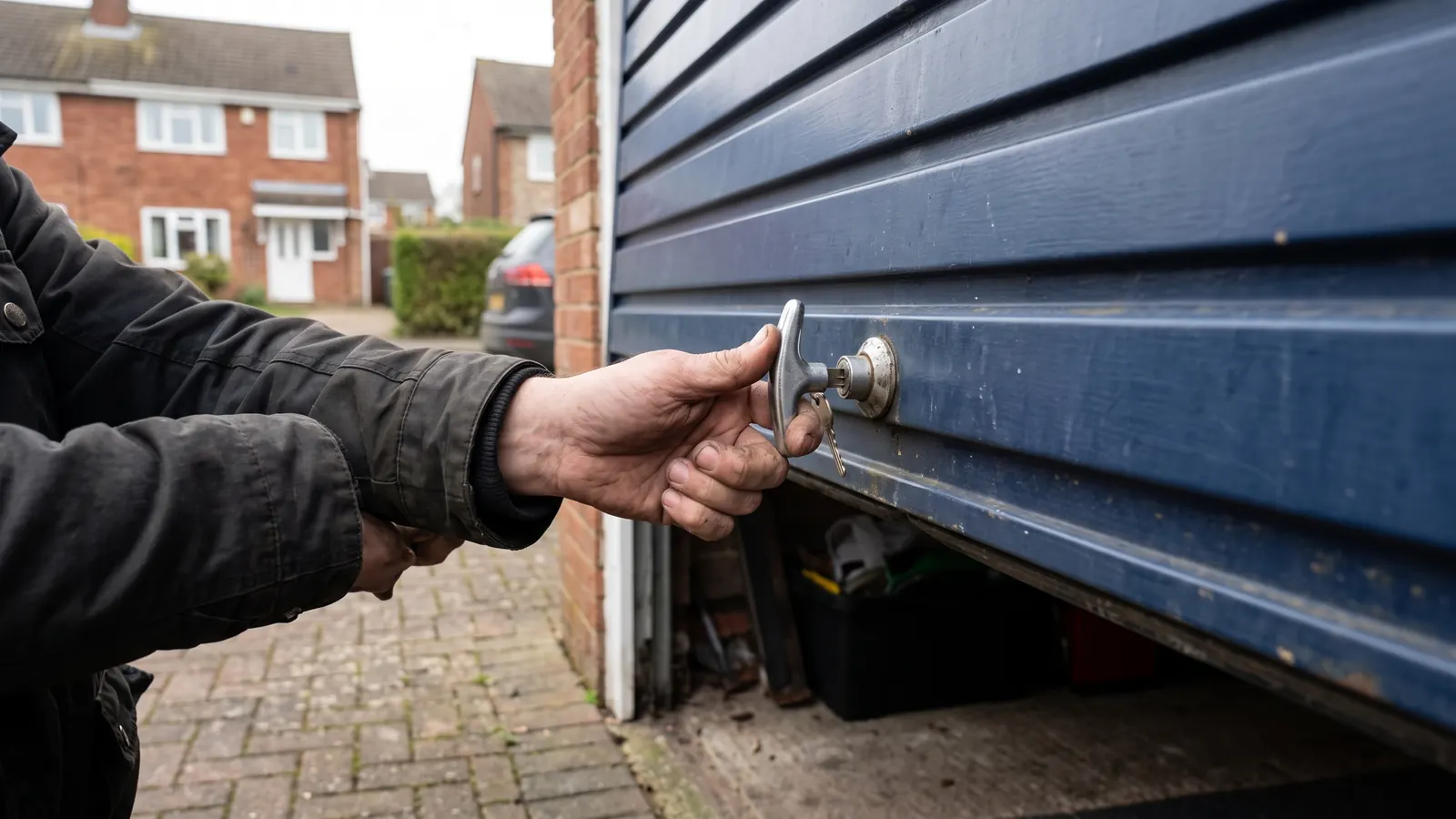
When we visit for a garage lock assessment, we start by looking at the whole picture rather than just the lock face: the door material and condition, how the frame meets the door, whether there is an internal connecting door to the house, and what is realistically stored inside. From there we talk through genuinely suitable options rather than a single default recommendation, explaining the practical difference in resistance between a basic T-handle lock, a defender-style upgrade, and any electronic options relevant to your specific door type. We would rather spend a few extra minutes on this conversation than fit something that does not actually match what you need protected.
Examples of Garage Security Situations We See Regularly
A tradesperson storing a van’s worth of tools overnight in a domestic garage is one of the clearest cases where an upgrade pays for itself quickly, given how far tool replacement costs can run if a garage is targeted. Another common situation is a household that has recently had a garage or shed broken into locally, even if their own property was not directly affected, prompting a reasonable, proactive upgrade before rather than after an incident. A third is simply an older property with the original builder-fitted lock still in place decades later, which was never a strong option even when new and has only grown weaker with age and use.
Garage Doors as Part of a Wider Home Security Review
We would always suggest thinking about the garage door as one part of a property’s overall security picture rather than in isolation. A strong garage lock paired with a weak or neglected front door lock still leaves a clear way in, so if you are already planning a garage upgrade, it is a reasonable moment to ask for a quick, honest check of your other external doors at the same visit, which we are happy to include.
Weighing Up Cost Against Risk for a Garage Upgrade
It is a reasonable question to ask whether a garage lock upgrade is really worth the cost compared to simply hoping nothing happens. The honest answer depends entirely on what is stored and how replaceable it would be. For a garage holding genuinely low value items, a basic working lock may be perfectly adequate, and we would say so rather than pushing an unnecessary upgrade. For anything approaching the cost of the upgrade itself in stored value, the maths tends to favour the upgrade clearly, particularly once the inconvenience and disruption of a break-in, not just the direct financial cost, is factored in.
Frequently asked questions
In most cases yes, though some very old or unusual door designs may need a bespoke solution, which we will confirm during assessment.
Some insurers offer better terms with a recognised security standard fitted, so it is worth checking your policy once the upgrade is complete.
A well-maintained modern lock typically lasts many years, though it is worth having it checked if you notice any stiffness or resistance when operating it.
Yes, this is a common and cost-effective approach that adds a security layer without removing the original mechanism.
It can, depending on the model, so we always check compatibility before recommending an electronic or motorised-adjacent lock option.
Yes, garages storing tools, bikes, or general household items benefit just as much from a secure lock as those used for parking.
Yes, in almost all cases the door remains usable throughout the fitting process and immediately afterward.
Some do, particularly where high value contents are declared, and we can provide simple written confirmation of work carried out if your insurer requests it.
Vulnerability depends more on the specific lock and frame condition than the door material alone, which is why we assess each property individually rather than assuming based on material.
Even a mostly empty garage is worth a basic working lock for general property security, though a full defender upgrade may not be a priority if there is genuinely little inside worth protecting.
Yes, the same assessment principles apply regardless of how the space is actually used day to day.
Yes, this is often a convenient time to combine both, saving a separate visit.
No, a properly fitted defender lock has no meaningful effect on how the door operates day to day.
We can flag anything obviously wrong, though for full track or roller servicing a garage door specialist would be the more appropriate call.
We can offer general advice, though for specific electrical or CCTV installation work we would point you toward a suitably qualified electrician or security installer.
Occasionally, particularly with older timber-framed garages, where we would assess the frame's condition alongside the lock itself.
Either works, though many customers find it convenient to address both as part of the same general home security review after moving in.
Yes, side-hinged doors use a different assessment approach, closer to a standard door lock, and we can recommend suitable options for this door type too.
We carry common sizes as standard stock, so most defender lock fittings are completed on the same visit without a wait.
Keep reading

Copyright © 2026 123Unlock, Design & Develop by Brand Builders.