Car Lock Repair: Locksmith Job or Garage Job?
Locked out of your house? Here's exactly what to try before calling a locksmith, and when calling one is genuinely the right move.
In this guide
- Car lock repair faults split between two different types of specialist, and calling the wrong one wastes time and sometimes money.
- Physical lock and key issues are locksmith territory, while electronic and wiring faults usually belong with a garage.
- A number of faults sit in a grey area, and getting a quick assessment first saves guessing.
- Auto locksmiths often work considerably faster and cheaper than a dealership for the specific faults they cover.
A car that won’t lock or unlock properly is a specific kind of frustrating, partly because it’s not always obvious who to call. Car lock repair genuinely splits between two different trades, and knowing which one you need before making a call saves both time and, quite often, an unnecessary call-out fee.
What Points Toward a Locksmith
A physical key that won’t turn in the lock, or turns with excessive resistance. This is classic locksmith territory, since it usually points to a mechanical fault within the lock cylinder itself rather than anything electronic.
A lock that’s been forced or damaged, whether from an attempted break-in or general wear, where the mechanical components themselves need repair or replacement.
A lost or damaged key needing replacement or cutting. Most auto locksmiths can cut and, in many cases, programme replacement keys for a wide range of vehicles, often faster and more affordably than going through a main dealer.
A single door lock that’s faulty while others work fine. This pattern, one specific lock misbehaving while the rest of the vehicle’s locking system functions normally, points toward a localised mechanical issue rather than a wider electrical fault.
What Points Toward a Garage
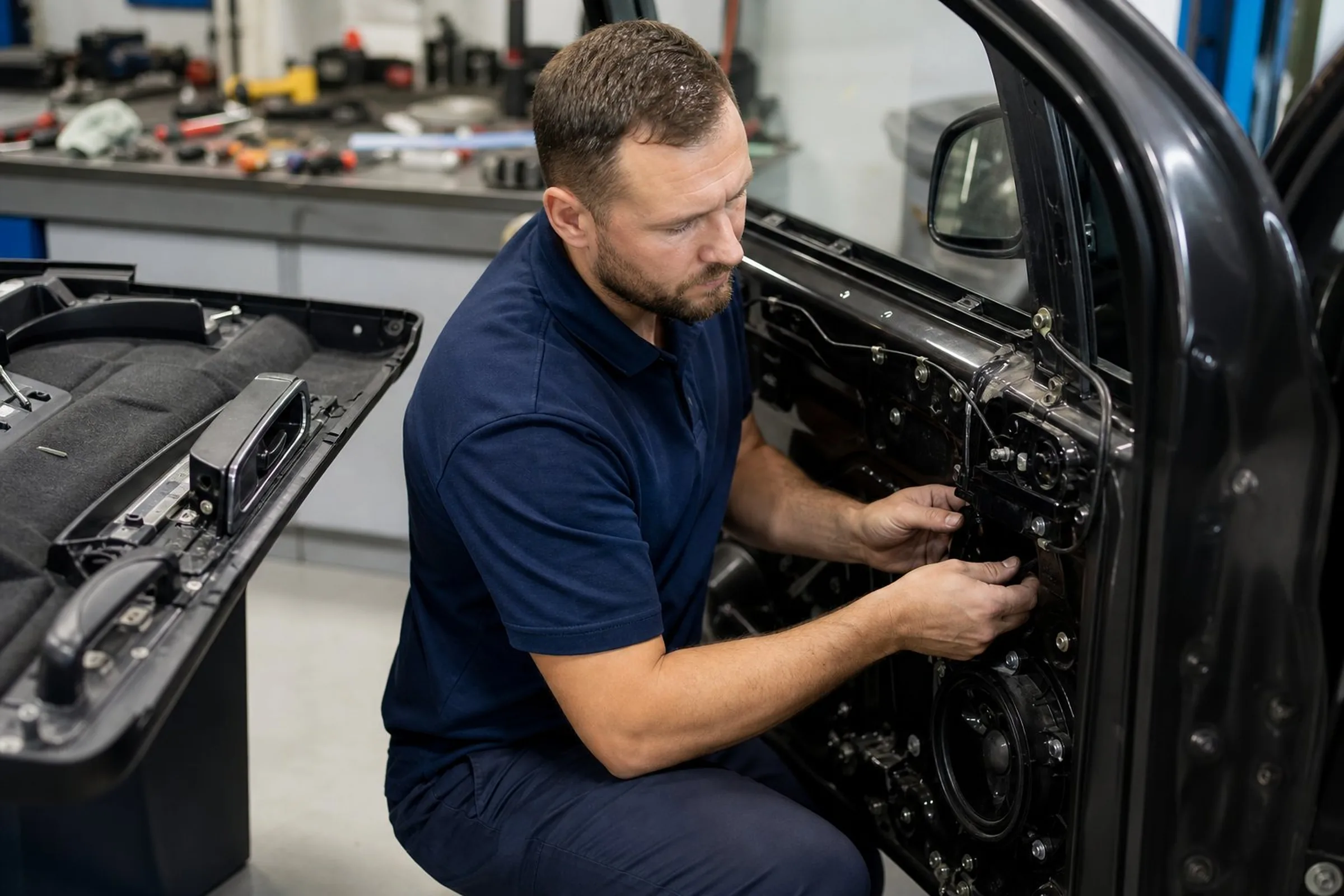
Central locking that’s failed across the entire vehicle simultaneously. This pattern usually indicates an electrical or wiring fault rather than a mechanical lock problem, and is better suited to a garage with vehicle electrical diagnostic capability.
A key fob that’s stopped communicating with the car at all, beyond a simple battery replacement, which can point toward a deeper electronic or programming issue requiring dealership or specialist electrical diagnostic equipment.
Faults that coincide with other electrical problems in the vehicle. If locking issues appeared alongside other electrical symptoms, such as dashboard warning lights or other systems behaving unusually, this points toward a broader electrical fault rather than an isolated lock issue.
The Grey Area Faults
A key fob battery that’s died, making remote locking unresponsive while the physical key still works. This is genuinely a simple, low-cost fix in most cases, a straightforward battery replacement, though whether a locksmith or garage handles it varies by provider.
A slow or intermittent central locking response. This can stem from either a minor mechanical sticking point within a specific lock or an early electrical fault, and often needs a brief assessment to determine which before committing to either route.
When in doubt, a quick phone description of the exact symptom to a locksmith usually clarifies which category the fault falls into. Most experienced auto locksmiths can tell fairly quickly from a description whether it’s within their scope or better suited to a garage, saving you from guessing.
Why Auto Locksmiths Are Often the Faster, Cheaper Route
For the faults within their scope, response times are typically considerably faster than booking a garage appointment. A locksmith call for a genuine lock or key issue can often be resolved same day, compared to a garage booking that might involve a wait of days or longer.
Costs for key cutting and lock repair are generally lower than main dealer pricing for the equivalent work. Dealerships often charge a premium for key replacement specifically, and an independent auto locksmith covering the relevant vehicle range can complete the same job for considerably less.
Non-destructive techniques mean the vehicle isn’t damaged in the process. A properly trained auto locksmith resolves most lock and key issues without needing to drill or force anything, preserving the vehicle’s condition throughout.
If you’re dealing with a car lock or key issue, call us and describe the symptom and we’ll tell you honestly whether it’s something we can fix or whether a garage would serve you better.
Frequently asked questions
It depends on the symptom. A physical key that won't turn, a damaged lock, or a single faulty door lock typically points to a locksmith. Central locking failure across the entire vehicle, or faults alongside other electrical issues, usually points to a garage.
Yes, for most vehicles. Auto locksmiths can cut and often programme replacement keys, typically faster and more affordably than going through a main dealer.
This pattern usually indicates an electrical or wiring fault rather than a mechanical lock problem, which is better diagnosed and resolved by a garage with vehicle electrical expertise.
Generally yes, for faults within a locksmith's scope. Dealerships often charge a premium for key replacement and lock repair specifically, compared to an independent auto locksmith.
Yes, in most cases. A properly trained auto locksmith uses non-destructive techniques for the large majority of lock and key faults, preserving the vehicle throughout the repair.
Keep reading

Copyright © 2026 123Unlock, Design & Develop by Brand Builders.