Quick answer: The main types of door locks in the UK are the mortice deadlock and sashlock, the rim night latch, the euro cylinder lock and the multipoint lock on uPVC and composite doors. Which one fits depends on your door. 123 Unlock, a DBS checked Ilford locksmith, can check your door and fit the right lock at any hour.
Most people never think about which lock they have until it breaks, sticks or the insurer asks. Then the questions start. Is it a mortice or a cylinder? Is a night latch enough? Does my lock meet a British Standard?
This guide explains the main types of door locks, which doors they suit, and the standards to look for. It uses advice from ProtectUK, the police crime prevention site, and the Master Locksmiths Association (MLA).
We are a locksmith in Ilford, so we replace these locks every week. The same door can be fitted in different ways, which is why a quick look at your door edge is the best first step.
Key takeaways
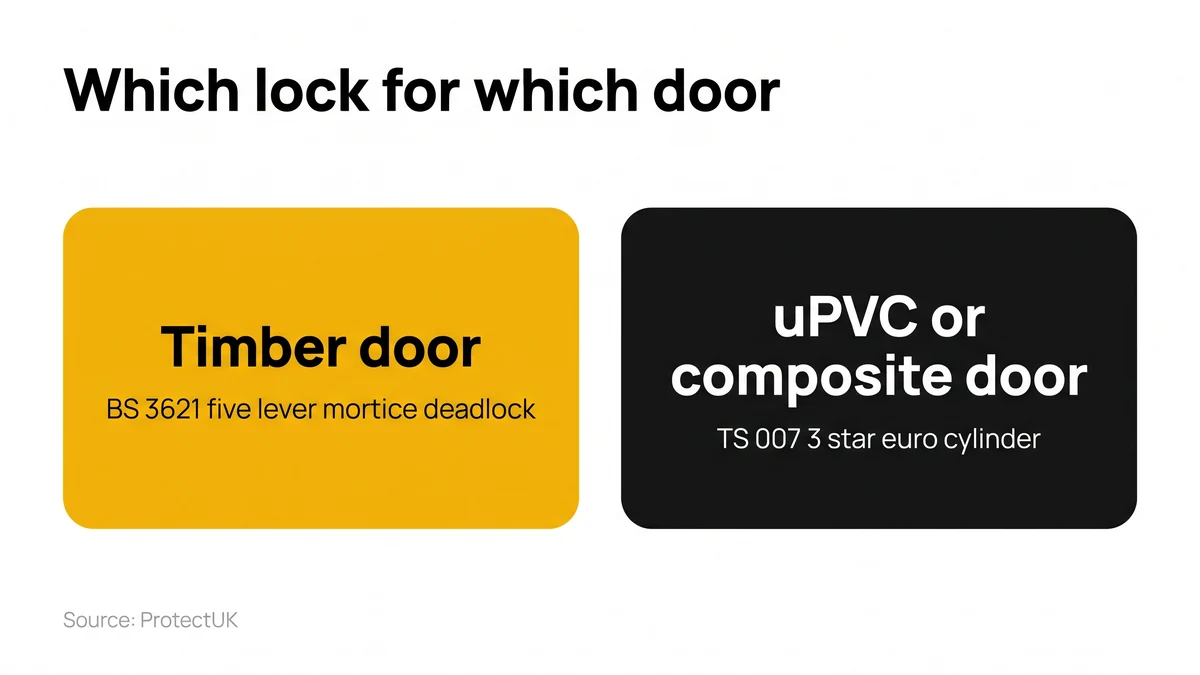
- Timber front doors usually need a BS 3621 five lever mortice deadlock, or a BS 3621 rim latch that locks itself.
- uPVC, aluminium and composite doors normally use a multipoint lock with a euro cylinder.
- ProtectUK points to a TS 007 3 star cylinder, or a 1 star cylinder with 2 star handles, for those doors.
- A basic three lever lock or a simple latch should not be assumed to meet BS 3621.
- Always check your insurer’s lock requirements before you buy.
DBS checked and insured. Typically with you in 20 to 35 minutes.
What are the main types of door locks?
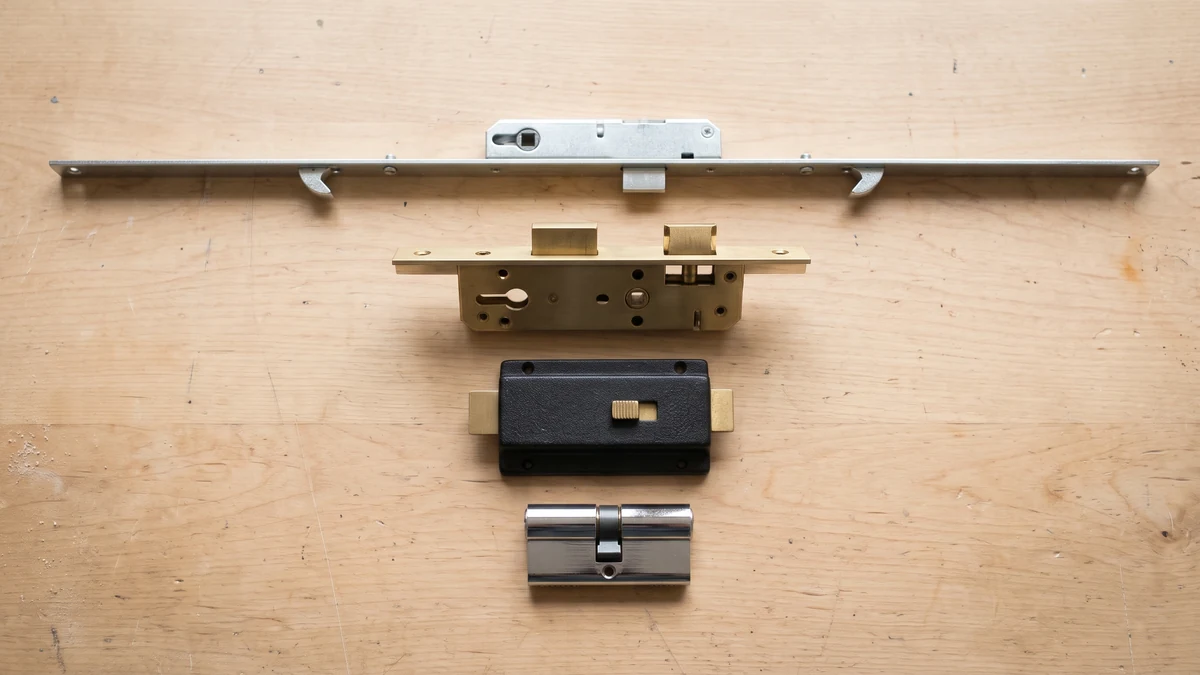
There are four types you will meet on most UK homes. The table shows where each one is used and the standard to look for. These standards come from ProtectUK and the MLA.
| Lock type | Where you find it | Standard to look for |
|---|---|---|
| Mortice deadlock or sashlock | Solid timber doors | BS 3621 (at least 5 levers) |
| Rim night latch | Timber doors, as a second lock or main lock | BS 3621 (some also BS 8621) |
| Euro cylinder | uPVC, aluminium and composite doors | TS 007 3 star, or SS 312 Diamond |
| Multipoint lock | uPVC, aluminium and composite doors | Fitted with a TS 007 cylinder |
Sources: ProtectUK, Security of the home (published 6 October 2022), and Master Locksmiths Association, Lock replacement guidance (read 23 November 2026).
You can read more about each lock below. If you are not sure which one you have, our British Standard locks service page shows what we fit.
What is a mortice lock?
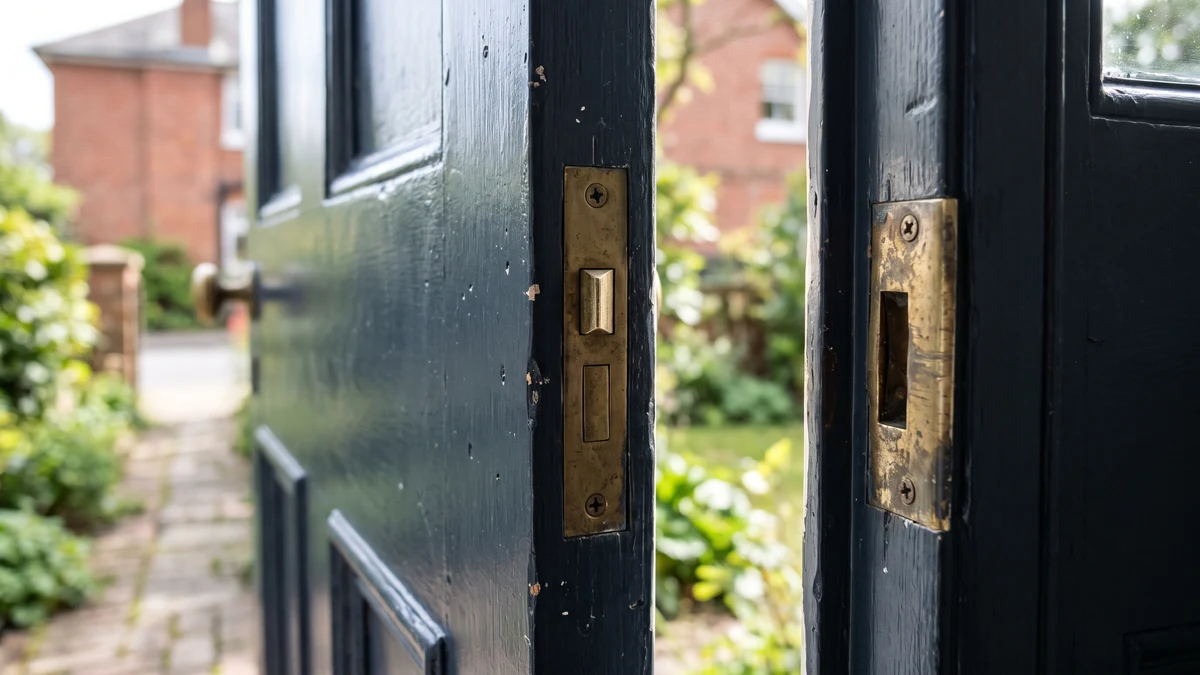
A mortice lock sits inside a slot cut into the edge of a timber door. The MLA lists the mortice sashlock and the mortice deadlock as types that can meet BS 3621. A sashlock has a latch and a bolt, so the door can be pulled shut. A deadlock has only the bolt.
ProtectUK says a solid timber front door should have a BS 3621:2017 five lever mortice deadlock, fitted one third of the way up the leading edge. It also says a solid timber door should be at least 44mm thick. The MLA says a mortice lock needs a minimum of five levers to meet BS 3621, which is why a plain three lever lock is not enough.
What is a night latch?
A night latch, or rim lock, sits on the inside face of the door. The key works it from outside, and a knob or catch opens it from inside. It is common on older timber doors, flats and back doors.
Not every night latch is the same. ProtectUK recommends a surface mounted BS 3621:2017 automatic deadlocking rim latch for a house, fitted one third of the way down the leading edge. The MLA says night latches can meet BS 3621 and BS 8621. A cheap latch with no mark may only keep the door shut, not protect it.
What is a euro cylinder lock?
A euro cylinder is the barrel with the keyhole. It fits into a slot in the door and works the lock case. It is the part most people replace, and you will find it on most uPVC, aluminium and composite doors.
This is also the part that burglars attack. ProtectUK says that for those doors you should use a DHF TS 007 Kitemarked 3 star cylinder, or a TS 007 1 star cylinder with a pair of TS 007 2 star handles. The MLA describes the TS 007 3 star cylinder as attack tested, and says the Sold Secure SS 312 Diamond mark is the highest test a cylinder can reach.
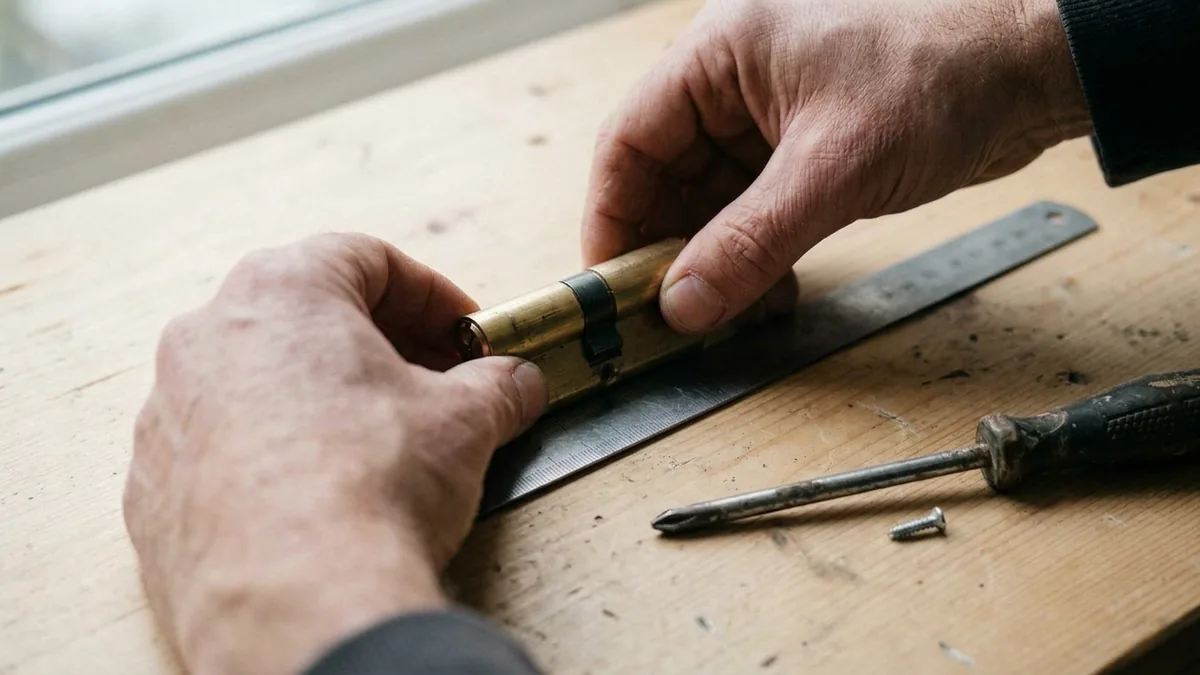
Our guide to anti-snap locks explains why snapping happens, and how to measure a euro cylinder lock helps you order the right size.
Call 123 Unlock. No call out charge, 24 hours a day.
What is a multipoint lock?
A multipoint lock locks the door in several places at once, usually with hooks and bolts that run up and down the edge, and it is worked by the handle and key. ProtectUK says multipoint locking is the norm for uPVC, aluminium and composite doors.
The cylinder in a multipoint lock is a euro cylinder, so the two work together. If the handle goes loose or the door stops locking, the fault is often in the gearbox or the keep. Our guide to uPVC door locking mechanism problems shows the common signs.
What about patio doors, garage doors and windows?
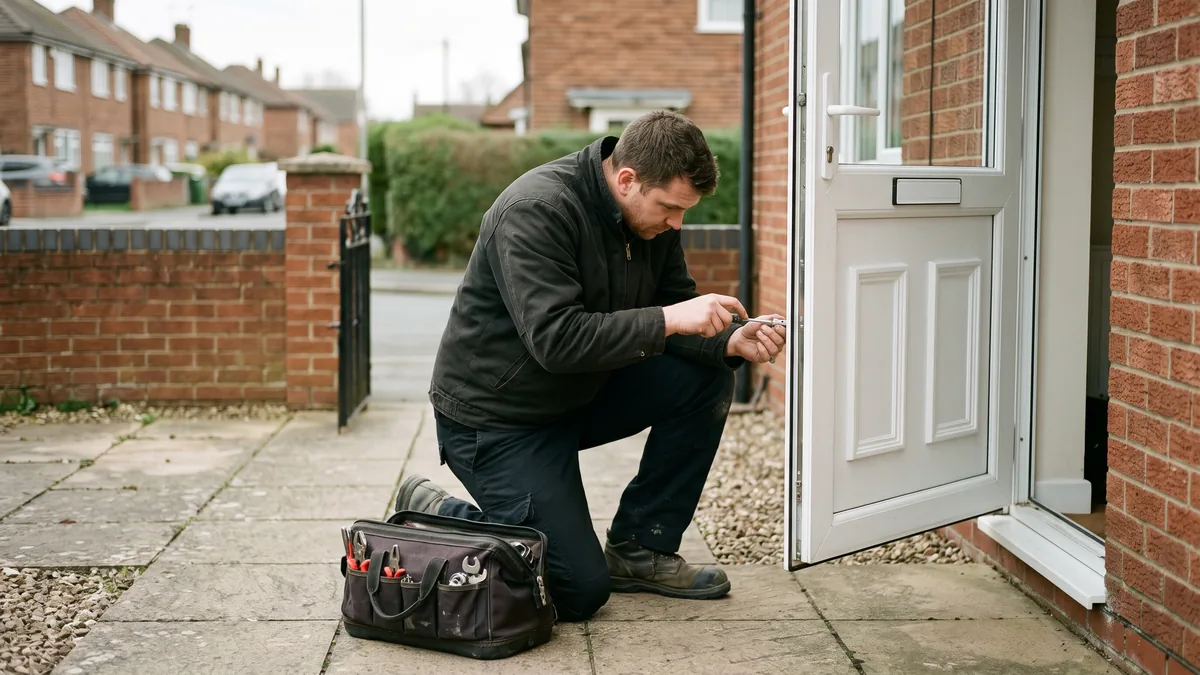
These have their own locks, and a locksmith treats them separately. Patio doors often use a hook or a multipoint lock, garage doors use a handle lock or a bolt, and windows use small cam or espagnolette locks. We replace them all, and the right part depends on the make and age of the door.
If you have a sticking patio door or a broken garage handle, you do not need to buy a whole new door. A locksmith can usually replace only the lock. See our patio door lock replacement and PVCu door lock replacement pages.
Are smart locks a different type?
A smart lock is a way of working a lock, rather than a different lock body. Many open with a code, an app or a fob, and the mechanical part still fits a standard door. When you choose one, check that the lock itself still meets the standard your door needs.
Our guide to smart locks versus traditional locks compares the two, and we fit them through our smart lock installation service.
How do you find out which lock you have?
Look at the edge of your open door. A faceplate with a long slot and a keyhole in the middle of the door usually means a mortice lock. A box on the inside face with a keyhole on the outside means a night latch. A long strip with a round barrel in it means a multipoint lock with a euro cylinder.
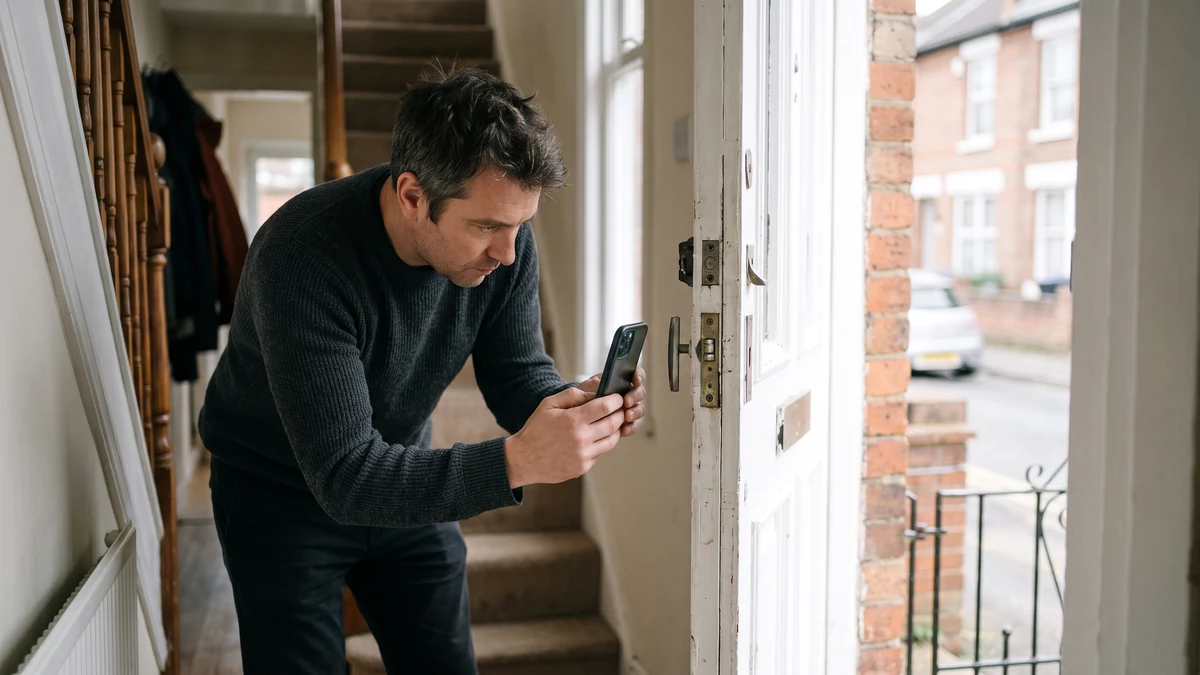
Then take a photo of the lock, the faceplate and the cylinder, and note the age of the door. Send it to us on WhatsApp or call, and we can tell you what you need before we arrive.
Does your insurer care about the type of lock?
Often, yes. The MLA says insurers prefer BS 3621 locks and suggests you find out what minimum your insurer requires. ProtectUK says security improvements should be made in consultation with your insurance company.
So before you buy, read your policy or ask your insurer which standard it wants. That one call can save you from a refused claim. Our page on door lock replacement explains what we fit and how we check the standard.
Frequently asked questions
What are the main types of door locks?
The main types of door locks in the UK are the mortice deadlock and sashlock, the rim night latch, the euro cylinder and the multipoint lock. Mortice locks and rim latches suit timber doors. Euro cylinders and multipoint locks suit uPVC, aluminium and composite doors. Garage doors, patio doors and windows use their own locks.
What is a five lever mortice lock?
A five lever mortice lock has five levers inside the case that a key must lift before the bolt moves. The MLA says a mortice lock needs at least five levers to meet BS 3621. ProtectUK recommends a BS 3621:2017 five lever mortice deadlock for a solid timber front door.
What lock do I need for a uPVC door?
Most uPVC doors use a multipoint lock with a euro cylinder. ProtectUK recommends a TS 007 3 star cylinder, or a TS 007 1 star cylinder with 2 star handles. An anti-snap cylinder with a recognised mark is safer than an unmarked one, so check the marking before you buy.
Is a night latch secure enough on its own?
It depends on the latch. A plain latch only holds the door shut. ProtectUK recommends a surface mounted BS 3621:2017 automatic deadlocking rim latch for a house. Many timber doors are safer with a mortice deadlock as well, so ask a locksmith to check your door and your insurance.
Can I change a door lock myself?
You can swap some locks, such as a euro cylinder, if you measure it correctly and use the right screws. A mortice lock or a multipoint lock is harder and a poor fit can leave the door insecure. Read our guide on how to change a door lock, or call a locksmith to be sure.
Conclusion
The types of door locks you need depend on your door. Timber doors suit a BS 3621 mortice deadlock or a deadlocking rim latch, and uPVC, aluminium and composite doors need a multipoint lock with a TS 007 rated cylinder. Check your insurer before you buy, and look at the lock marks before you pay. 123 Unlock is a DBS checked, insured Ilford locksmith, with no call out charge and a six month warranty on our work. Call 07958 516359 and we will advise on the right lock for your door.
Available 24 hours a day across Ilford and East London.