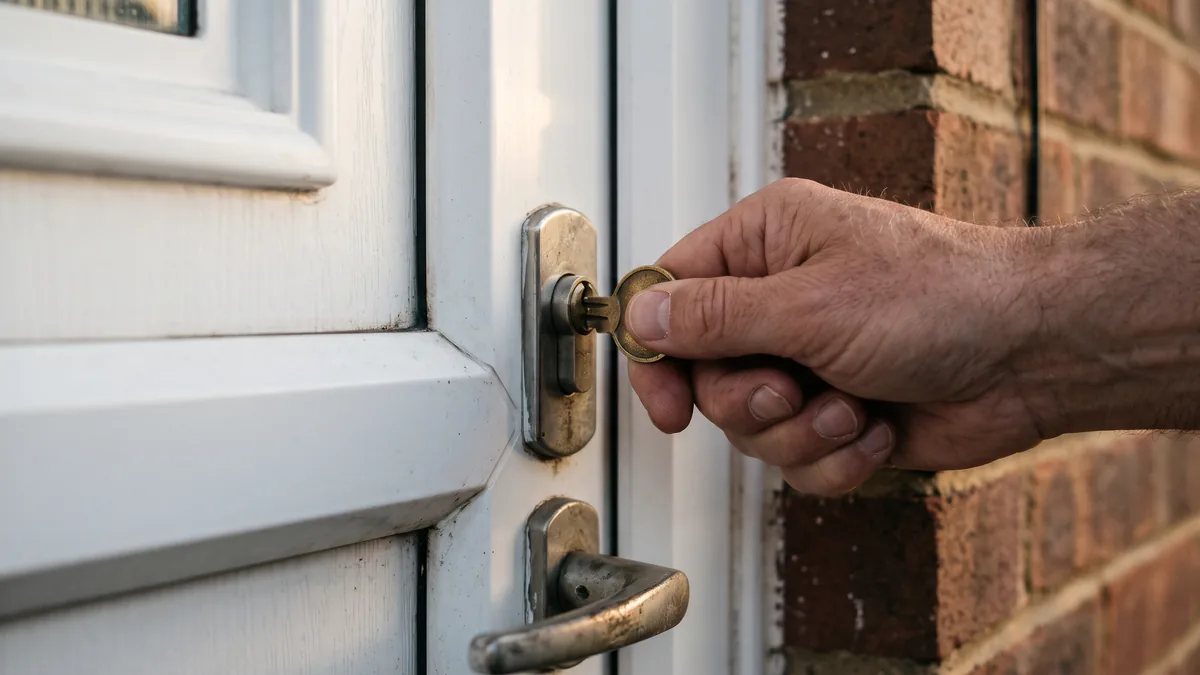
Quick answer: Key stuck in lock? Stop turning it, because forcing it is how keys snap. Lift the door handle if it is a uPVC door, ease the key back a tiny amount and try again gently, and call a locksmith if it still will not move. 123 Unlock covers Ilford, Barkingside, Gants Hill and East London, 24 hours a day.
A key stuck in the lock is one of the most common reasons people call us. The key goes in, but it will not turn, will not come out, or sticks half way round. The good news is that it is often a small problem, as long as you do not make it bigger.
This guide is for a key that is stuck, jammed or half turned. If your key has snapped, read our guide on what to do with a broken key in a door lock instead.
We are a local locksmith in Ilford, so these are the steps we would give a neighbour over the phone.
Key takeaways
- Stop forcing the key. Hard turning is what snaps keys and wrecks cylinders.
- On a uPVC door, lift the handle fully while you turn the key, and ease the key back slightly.
- A worn key, dirt, a door that has dropped or a failing cylinder are the usual causes.
- Use a dry lubricant made for locks. Do not use pliers, hammers or glue.
- If the key is stuck half turned or will not come out, call a locksmith before it breaks.
Open 24 hours. DBS checked and fully insured. Call 07958 516359.
Why is there a key stuck in lock and not turning?
Most stuck keys come from one of five causes. Knowing which one you have tells you what to try.
- A worn or badly cut key. A copy that is not quite right, or a key that has worn down, no longer lifts the pins in the cylinder properly.
- Dirt or dust inside the cylinder. Years of grit, pocket fluff and old grease make the pins sluggish.
- A door that no longer lines up. If the door has dropped on its hinges, the bolts press on the frame and the key has to fight them.
- A failing cylinder. The pins or the cam inside can wear out and jam.
- A faulty multipoint mechanism. On uPVC and composite doors, the gearbox behind the handle can fail.
The Master Locksmiths Association says the main reason a key will not turn in a uPVC or composite door is a broken locking mechanism, and a failed euro cylinder is another common cause. So a stuck key on a uPVC door is not always the key’s fault.
Source: Master Locksmiths Association, My Key Won’t Turn In Lock.
Key stuck in lock: what should you do first?
Stay calm and go through these steps in order. Each one is gentle.
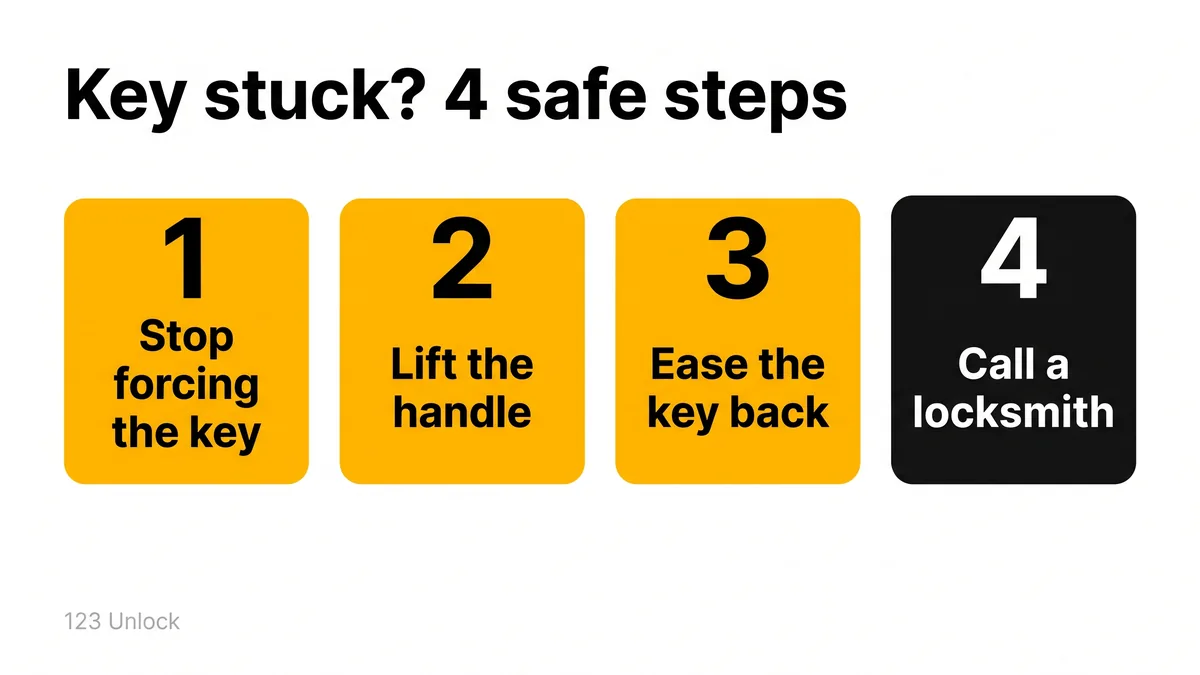
- Stop turning. Take your hand off the key and look at the door. Do not twist harder, because a snapped key is a bigger job than a stuck one.
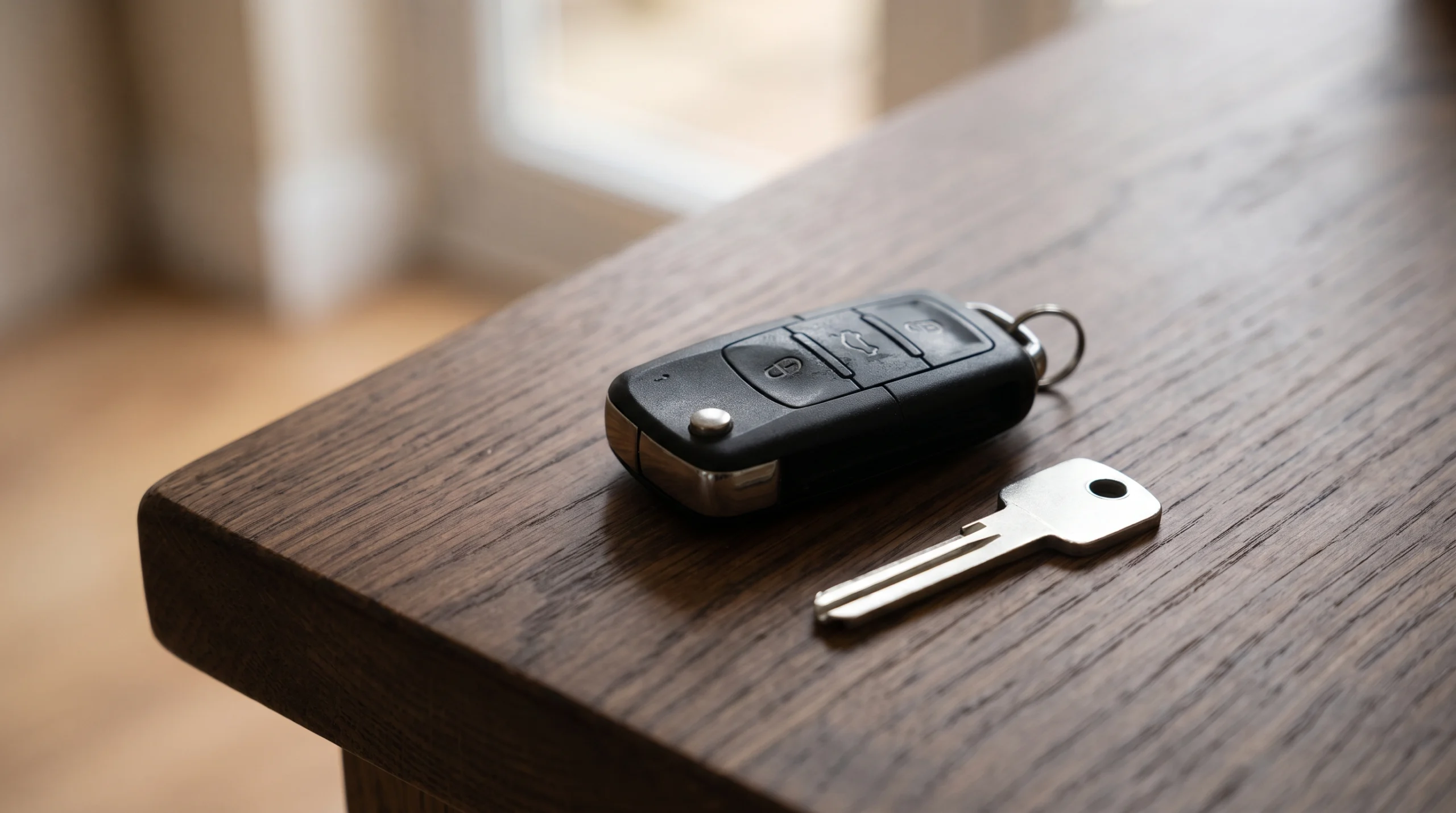
- Check it is the right key. In a hurry it is easy to pick up the key for the back door or the shed. Check the key is fully in.
- Ease the key back a tiny amount. Many cylinders only turn when the key sits at exactly the right depth. Pull it out a millimetre or so and try again with light pressure.
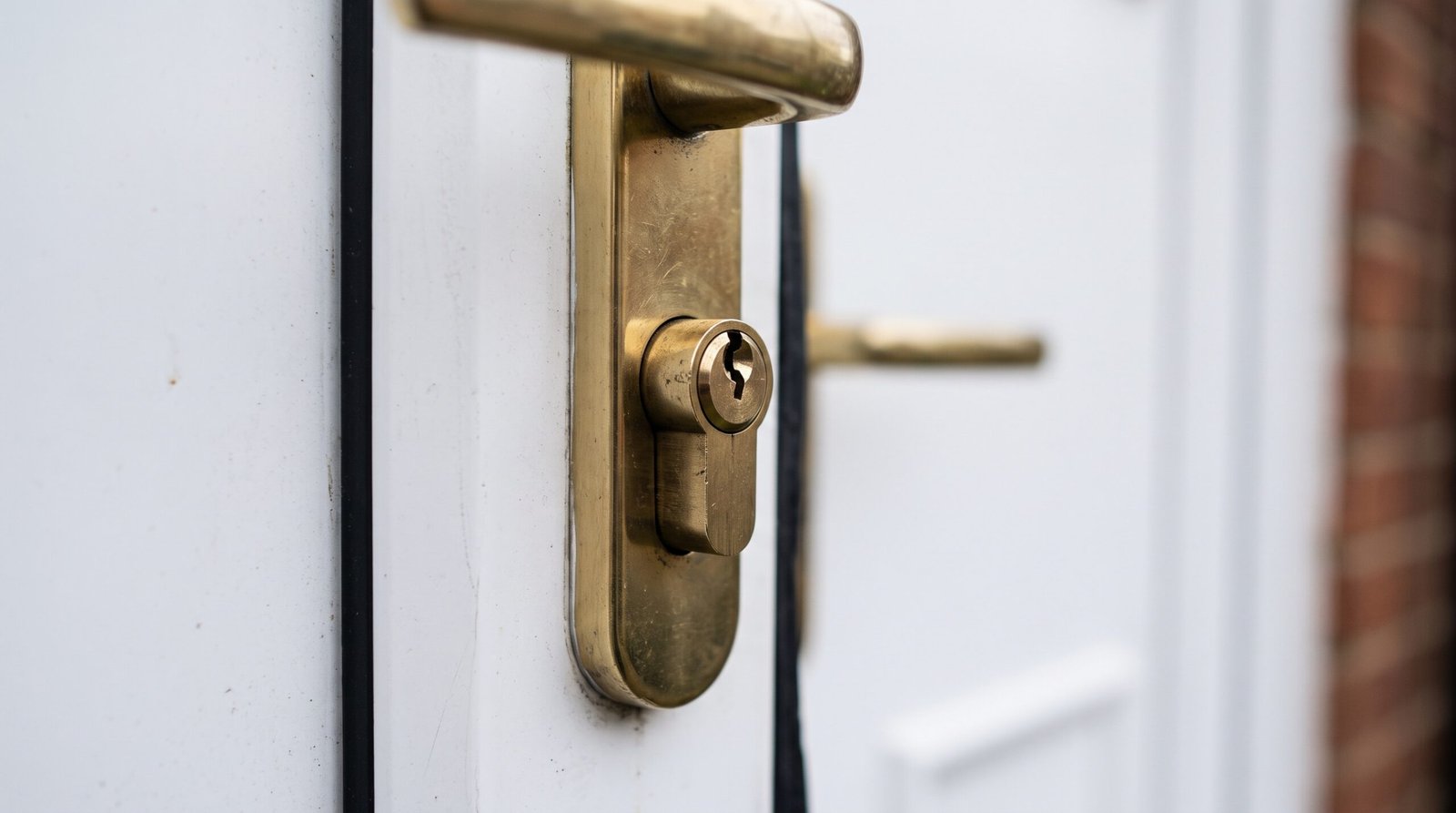
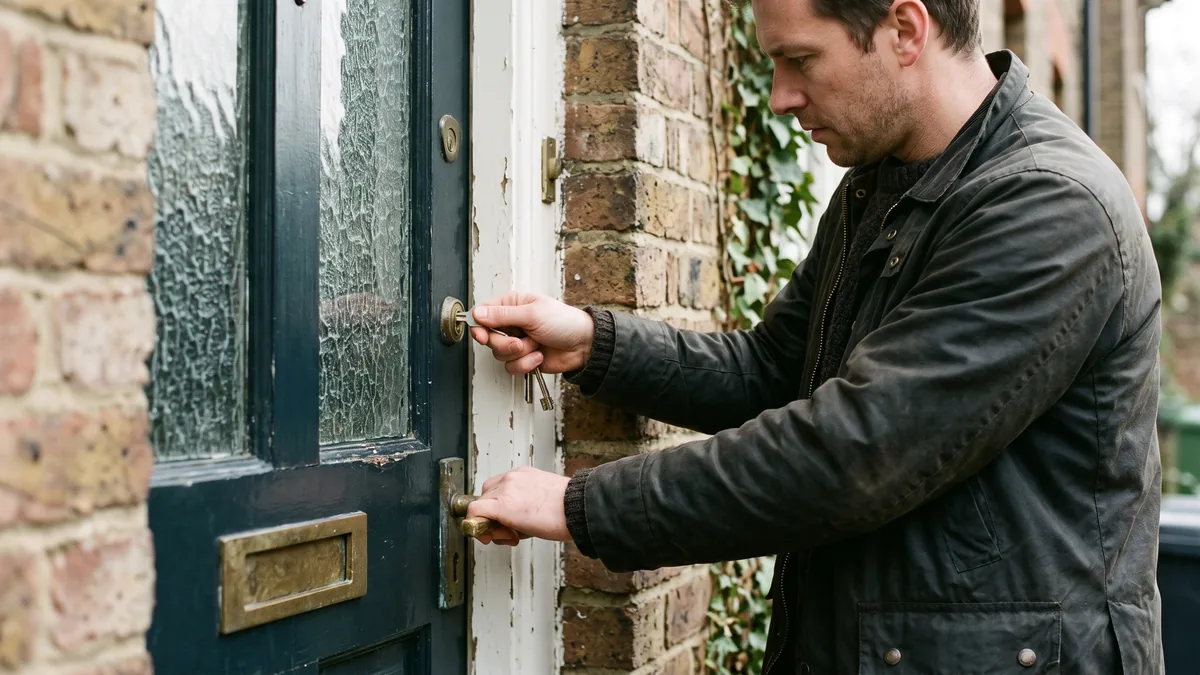
- Lift the handle on a uPVC door. Lift the handle fully up, hold it there and turn the key. On a multipoint lock the bolts only move freely when the handle is in the right position.
- Take the weight off the door. Push or pull the door slightly towards the frame while you turn the key. A door that has dropped can bind the bolts.
- Try a dry lubricant. A small amount of dry lubricant made for locks on the key, then in the cylinder, can free sticky pins.
If it works, do not just carry on as normal. Get the key checked, because a stiff lock is a warning that something is wearing out.
What should you not do with a stuck key?
A few things make the problem much worse.
- Do not use pliers, a hammer or a screwdriver. They bend the key, damage the cylinder and can leave scratches that show a lock has been tampered with.
- Do not use glue. Glue in a cylinder is very hard to undo.
- Do not keep forcing. The brass of a key can twist and snap inside the lock.
- Do not pour oil into the cylinder. Many locksmiths prefer a dry lubricant made for locks, because oil can collect dust and gum up over time. This is general trade advice, not a rule.
- Do not take the lock apart if you are not sure. You can lose small parts and leave the door unsecured.
The same Master Locksmiths Association advice for a broken key says that trying to remove it yourself can push it further in and damage the lock. The same logic applies to a stuck key.
What if the key is stuck half turned?
A key stuck half turned is a more serious sign. It usually means the cylinder has jammed with the key part way round. Do not force it in either direction.
Try the steps above gently, especially lifting the handle on a uPVC door and taking the weight off the door. If the key still will not move, call a locksmith. Forcing a half turned key is how people end up with a broken key and a door that will not open.
If the door is locked and you cannot get in, see our guide on what to do when you are locked out of your house.
Call 07958 516359. No call out charge.
When should you call a locksmith?
Call a locksmith if any of these are true.
- The key will not come out, or is stuck half turned.
- The key turns but the door does not unlock.
- The key is bent or you can see metal missing.
- The lock has been stiff for weeks and is getting worse.
- You are locked out or locked in and the door will not open.
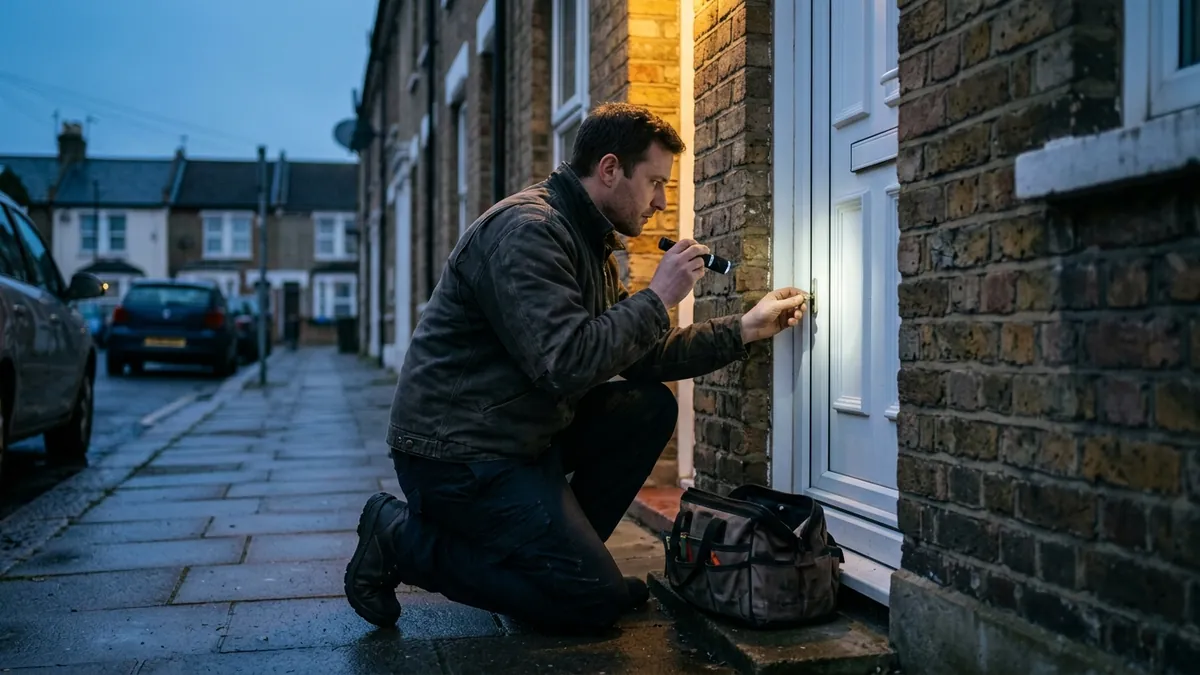
- You are on your own late at night and the door is your only way in or out.
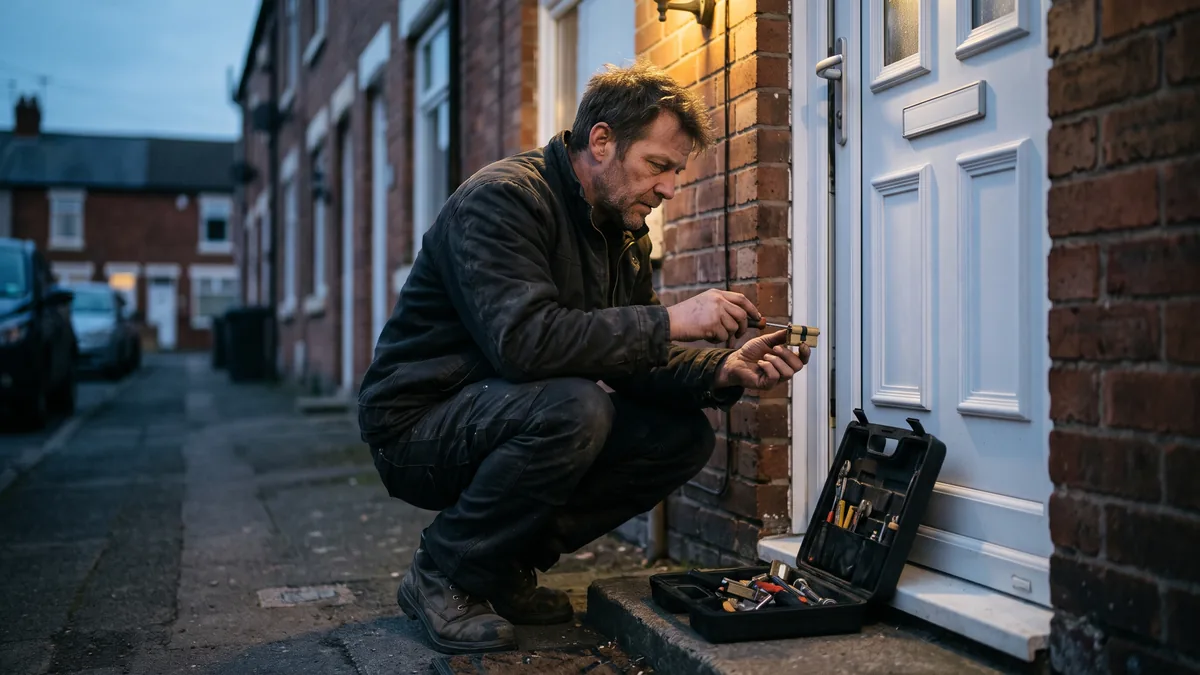
A locksmith can usually free the key and get the door open without damage. In many cases the cylinder then needs replacing, which is quick and often cheaper than waiting for it to fail. Typical visits take 20 to 35 minutes.
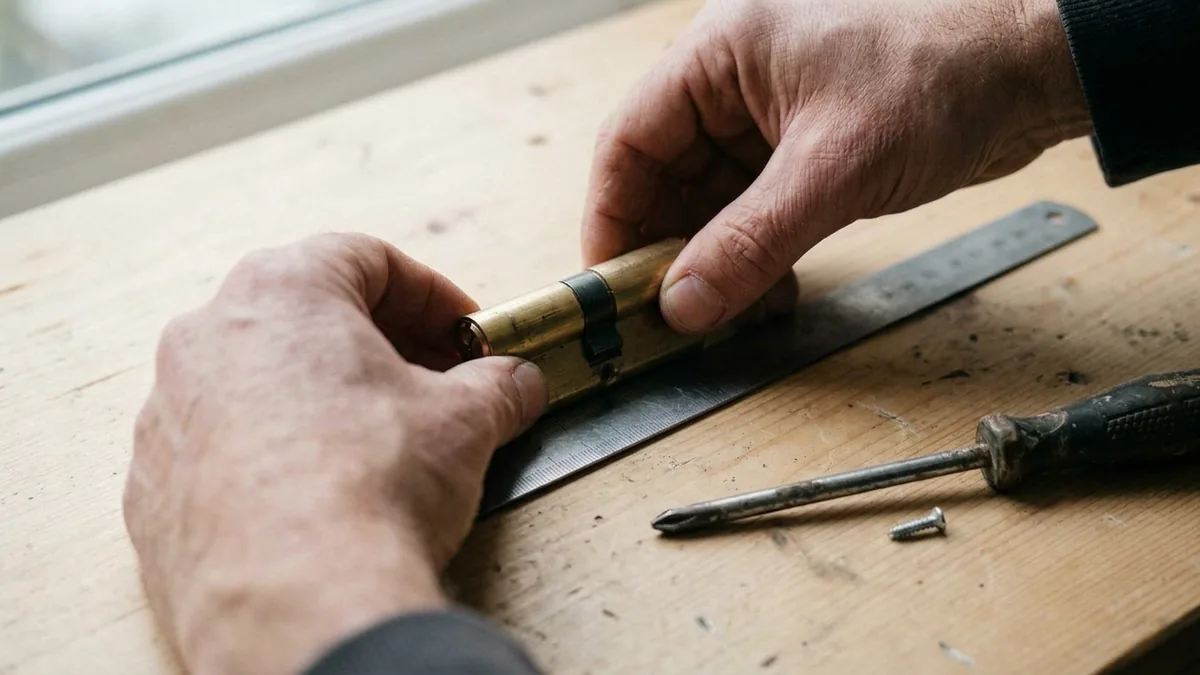
For a uPVC door with a euro cylinder, our guide on how to measure a euro cylinder lock shows what size you have. If the cylinder is old, an anti snap upgrade is worth considering. Our anti snap lock guide explains why.
How much does it cost to fix a stuck lock?
The cost depends on what has failed. A stuck key that comes free with a lubricant and a quick adjustment is quite different from a failed multipoint mechanism. A cylinder swap is different again.
We do not quote a price in a blog post because every door is different. We do not charge a call out fee, and we tell you the price before we start. For a breakdown of what to expect on a uPVC door, read our guide on uPVC door lock repair costs.
A genuine locksmith should not ask for a surprise price at the door. Our guide on locksmith scams in the UK lists the warning signs.
How can you stop a key getting stuck again?
A few habits help, and they cost almost nothing.
- Replace worn keys. Cut a fresh copy from the original key, not from an old copy.
- Keep the lock clean. Wipe the key and use a dry lubricant made for locks once or twice a year.
- Lift and close properly. On a uPVC door, lift the handle before you turn the key, and do not slam the door.
- Fix a door that has dropped. A door that rubs or needs a shove to close puts load on the bolts. A fitter can adjust the hinges.
- Replace an old cylinder before it fails. If the key has felt stiff for months, do not wait for the day it jams.
Winter can make locks stiffer, so watch for it when the weather turns. Our door lock replacement and uPVC door lock replacement pages explain what we fit.
Frequently asked questions
Why is my key stuck in the lock and not turning?
Common causes are a worn or badly cut key, dirt inside the cylinder, a door that has dropped and is binding the bolts, a failing cylinder or a faulty multipoint mechanism. The Master Locksmiths Association says a failed locking mechanism is the main cause on uPVC and composite doors. Stop forcing the key and try the gentle steps.
How do I get a stuck key out of a lock?
Do not pull hard. Ease the key slightly back and forth, lift the handle on a uPVC door, take the weight off the door and try a small amount of dry lubricant made for locks. If the key still will not move, call a locksmith. Forcing it can snap the key inside the cylinder.
What should I do if my key is stuck half turned?
Do not force it in either direction. Try lifting the handle on a uPVC door and easing the key back a tiny amount. If it is still stuck, call a locksmith. A half turned key often means the cylinder has jammed, and forcing it is a common way keys break.
Can I use WD40 on a stuck lock?
Many locksmiths prefer a dry lubricant made for locks, because oil can collect dust and gum up the pins over time. This is general trade advice, not an official rule. If you are not sure what to use, ask a locksmith. Never pour glue or heavy oil into the cylinder.
How long does a locksmith take to fix a stuck key?
A typical visit takes 20 to 35 minutes. We free the key, check the cylinder and the door, and tell you the price before we start. If the cylinder has worn out, we can usually replace it on the same visit, so you leave with a door that locks properly.
Conclusion
Key stuck in lock? It is not always a disaster, but forcing the key can turn a small job into a big one. Stop turning, lift the handle, ease the key back and try a dry lubricant. If the key is stuck half turned, will not come out or the door will not open, call a locksmith. 123 Unlock covers Ilford, Barkingside, Gants Hill and East London, 24 hours a day. Call 07958 516359 and we will tell you the price before we start.
DBS checked, fully insured, open 24 hours.